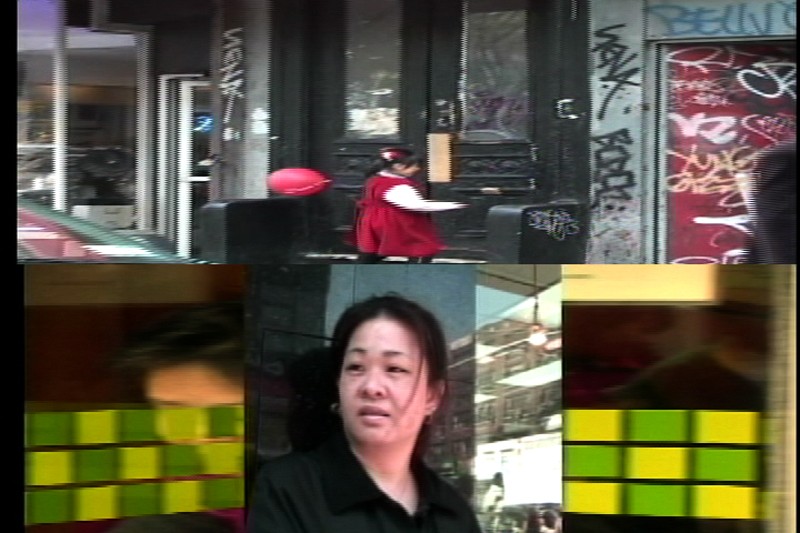
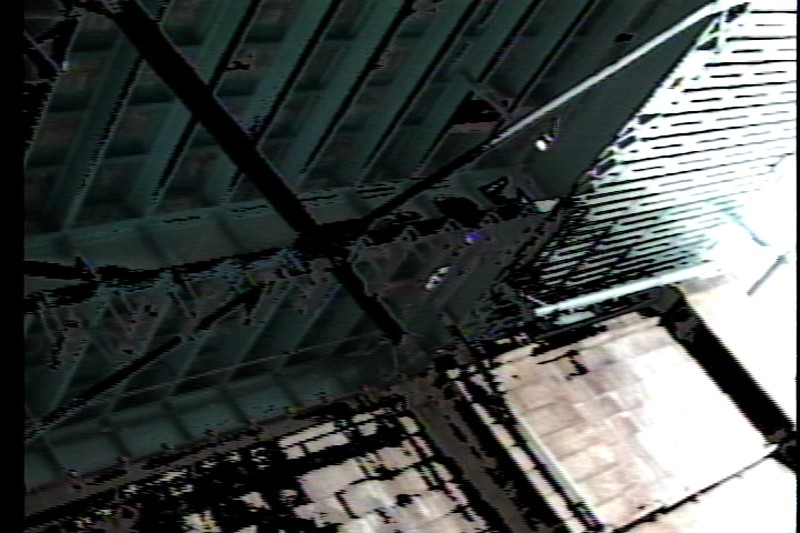
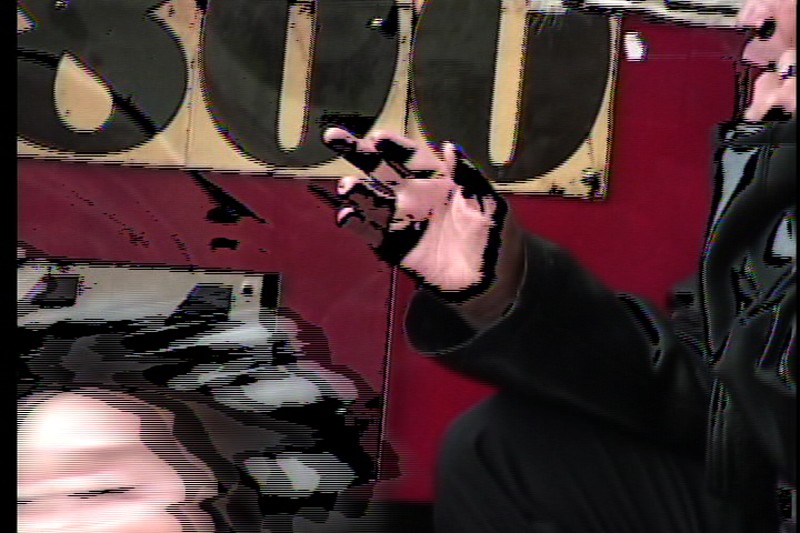
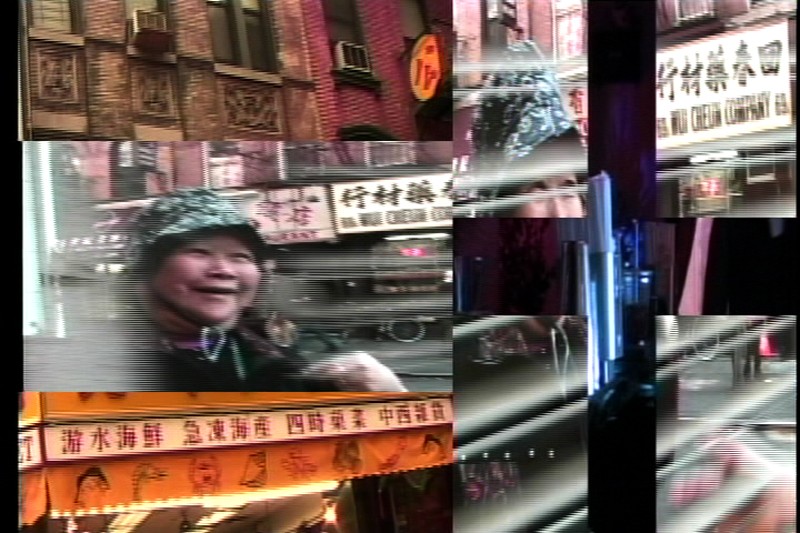
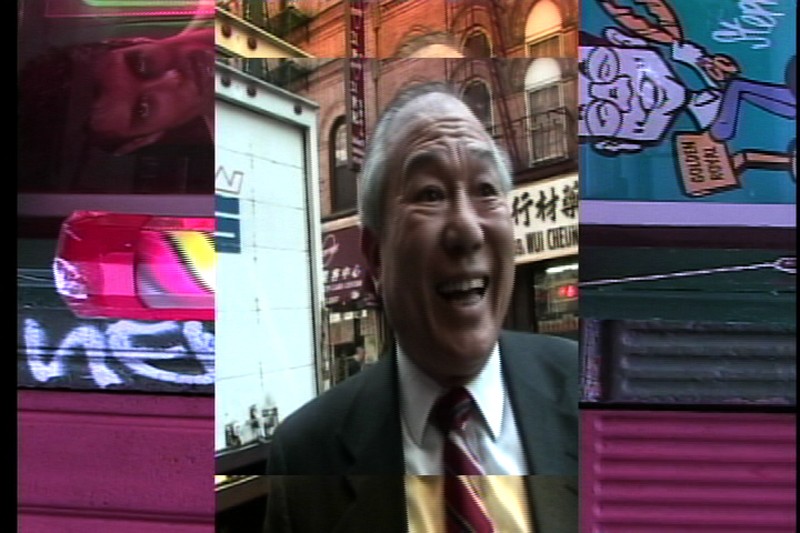
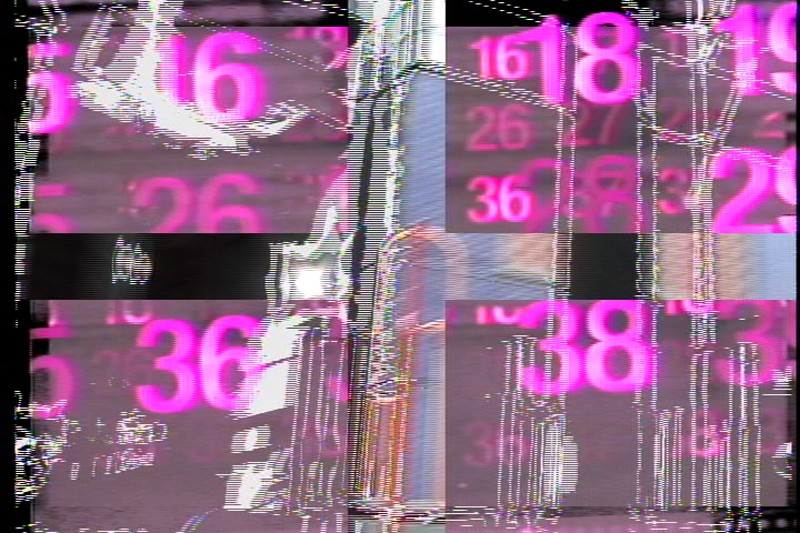
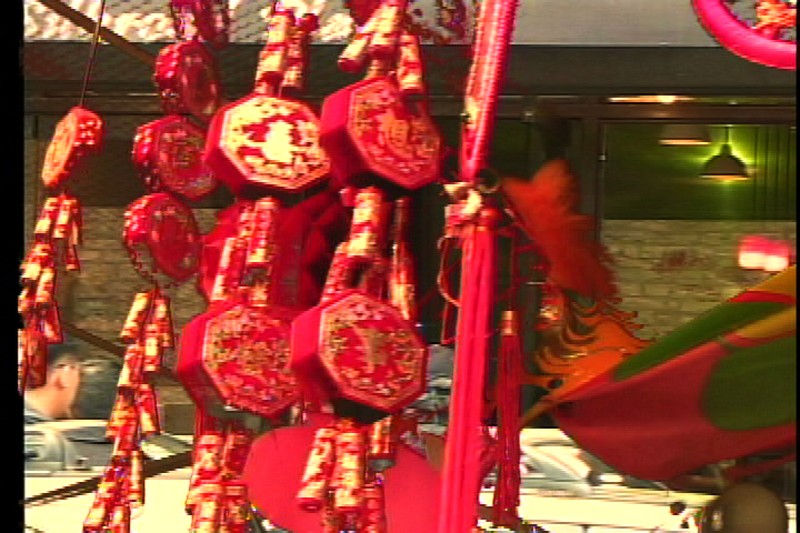
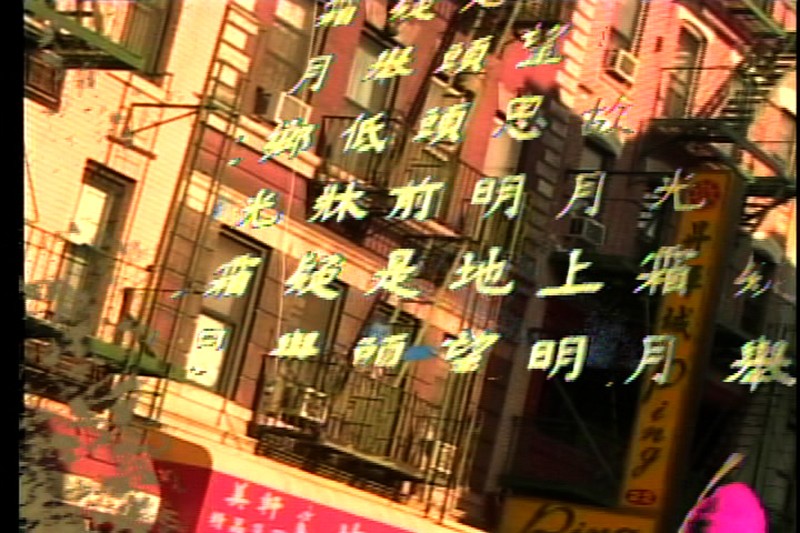
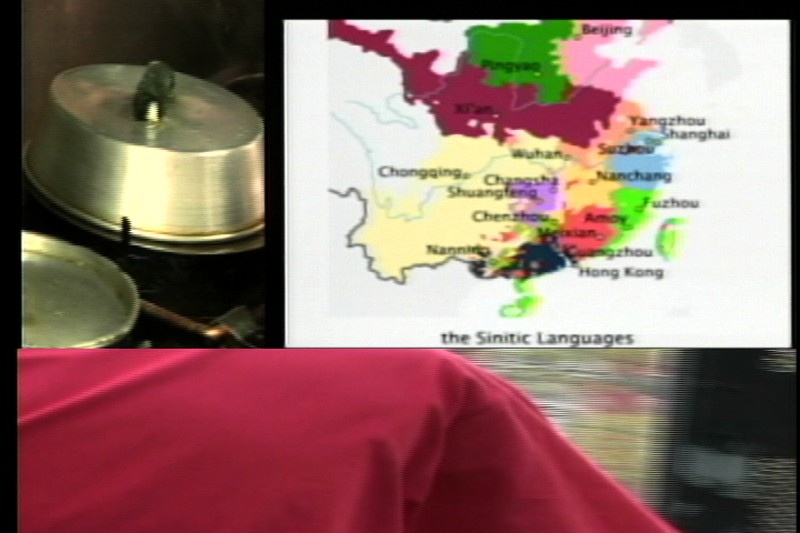
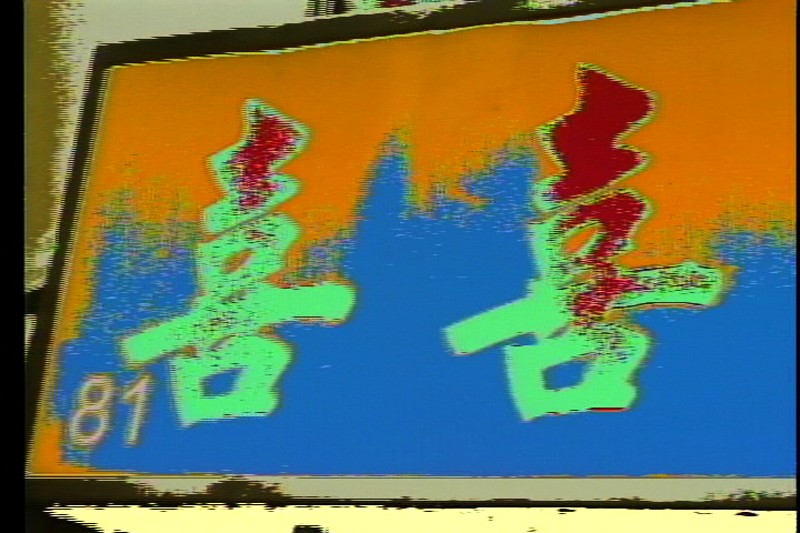
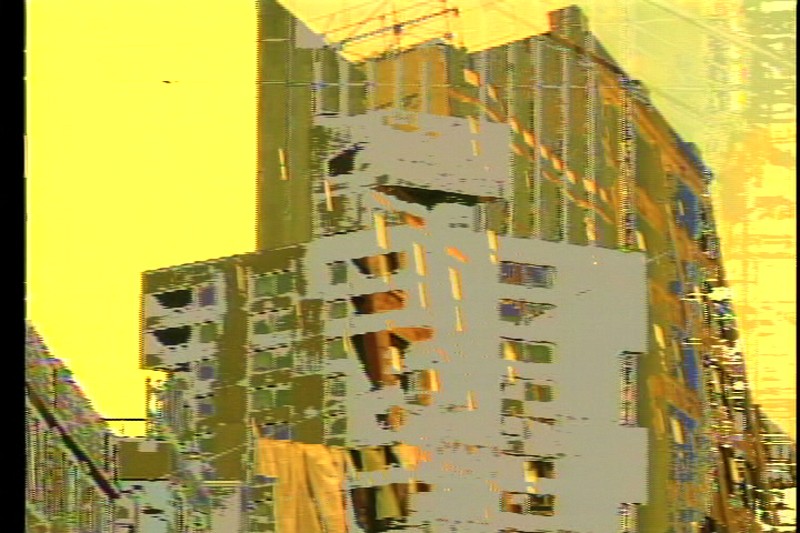
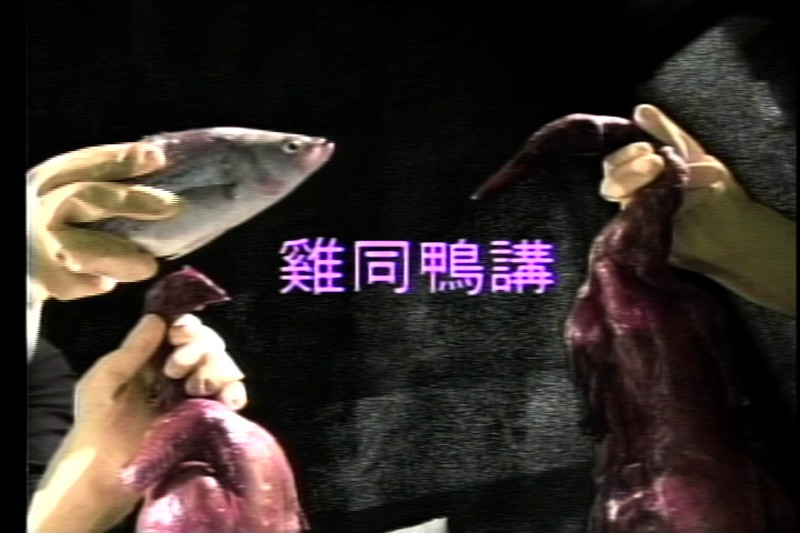
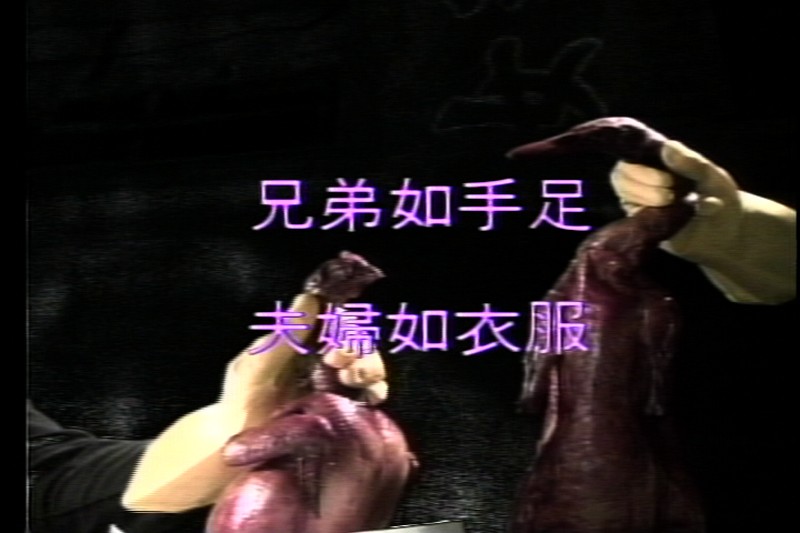
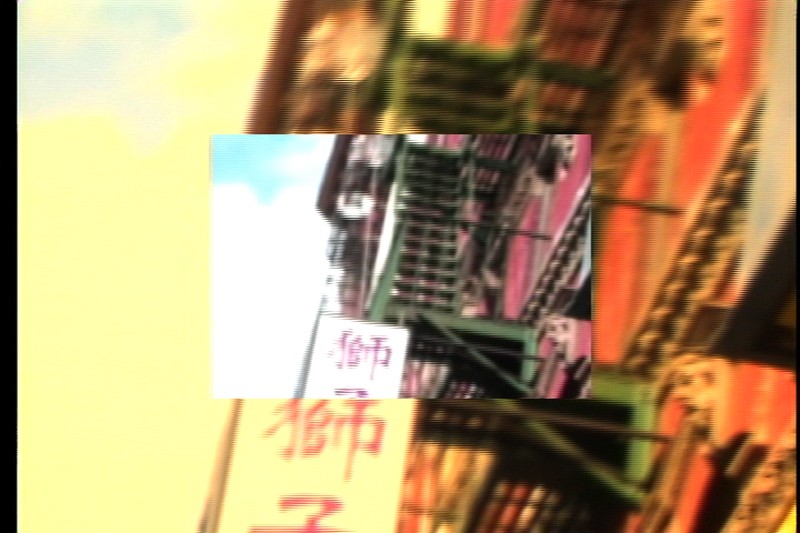
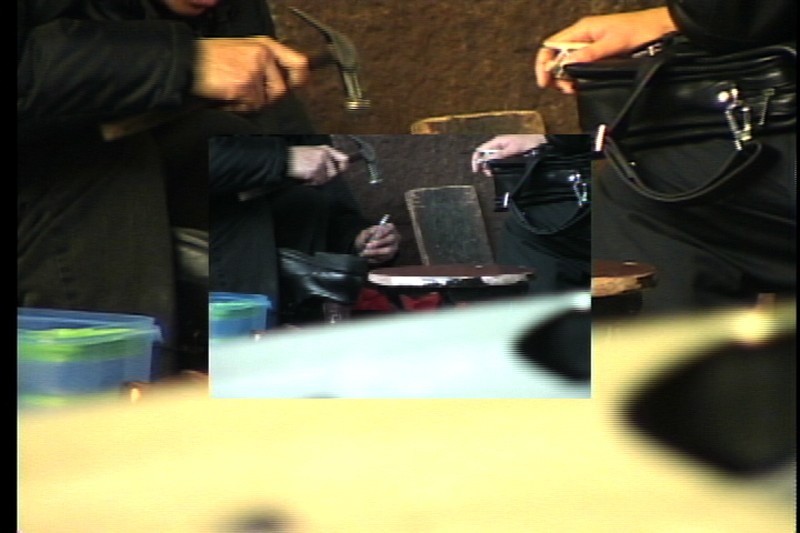
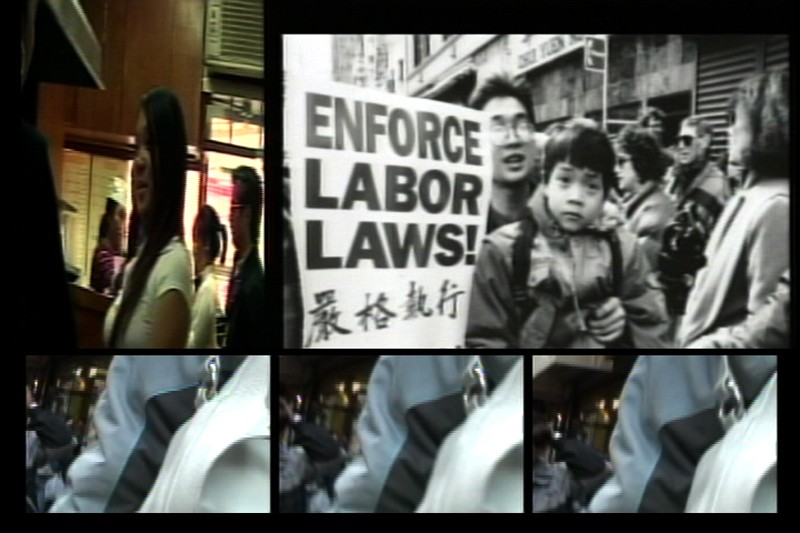
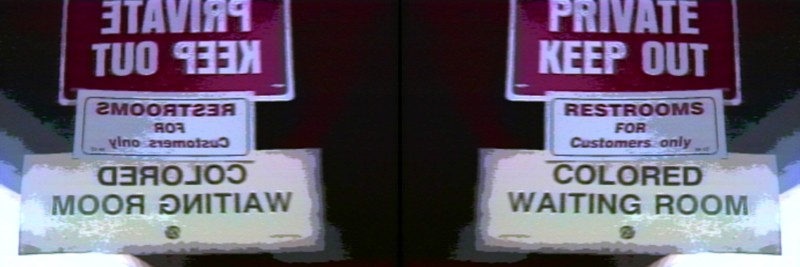
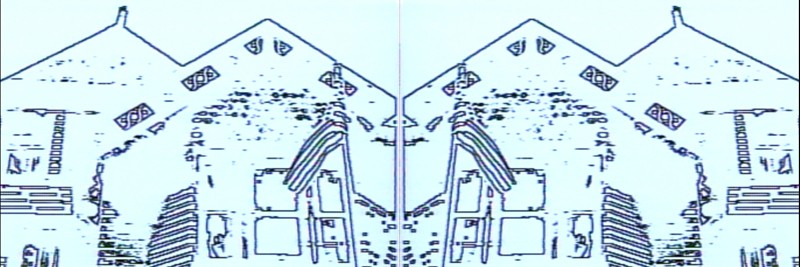
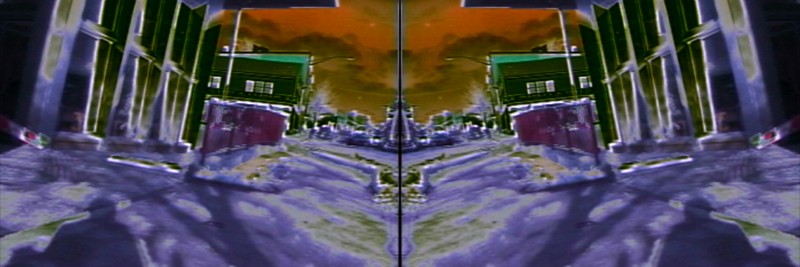
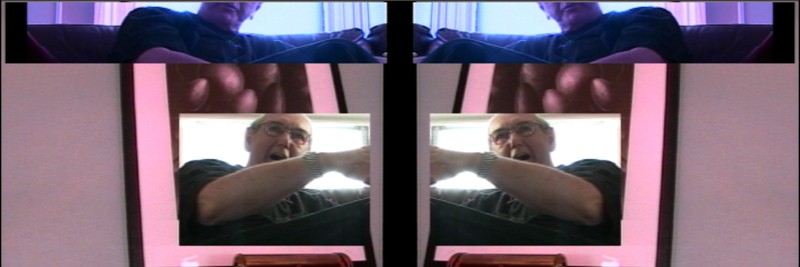
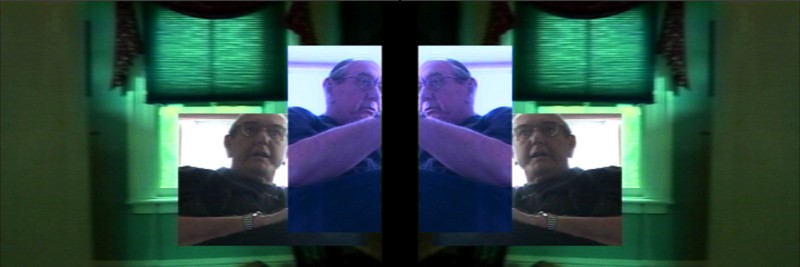
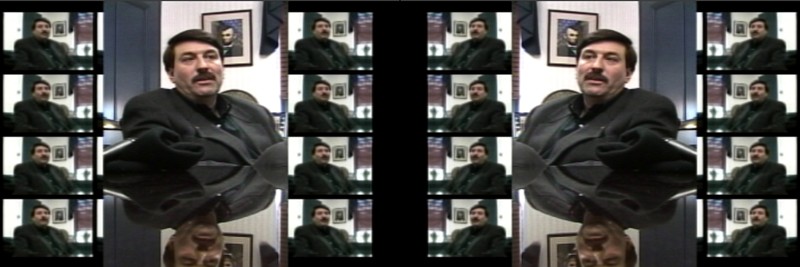
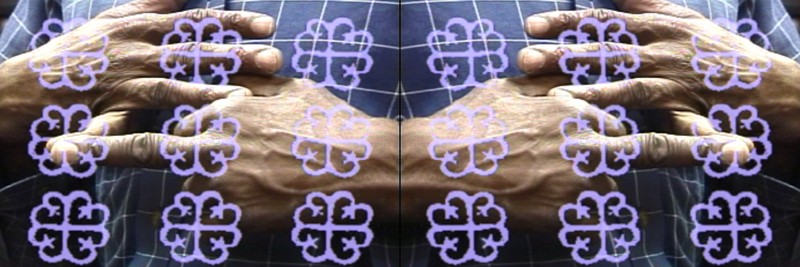
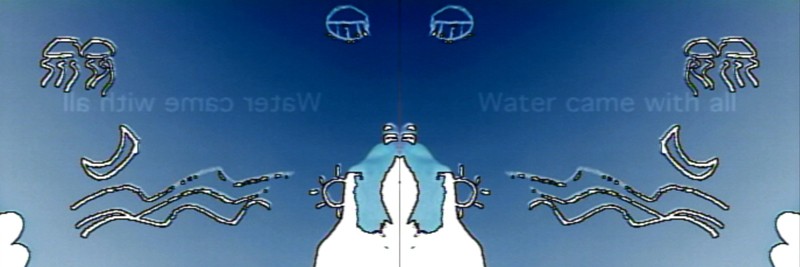
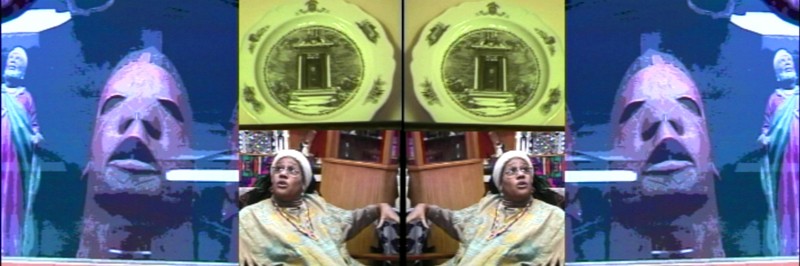
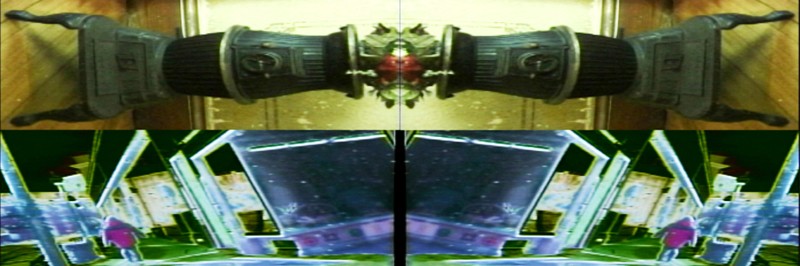
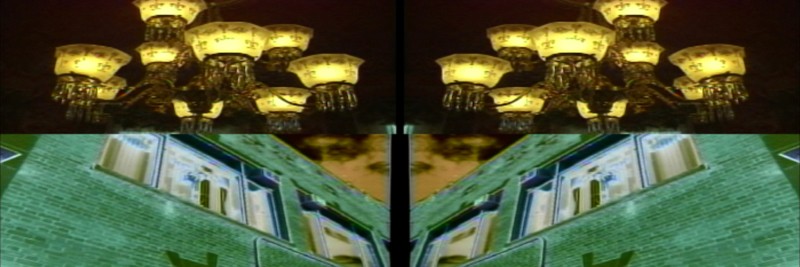
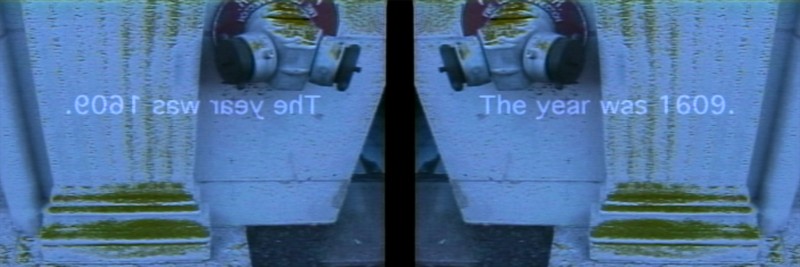
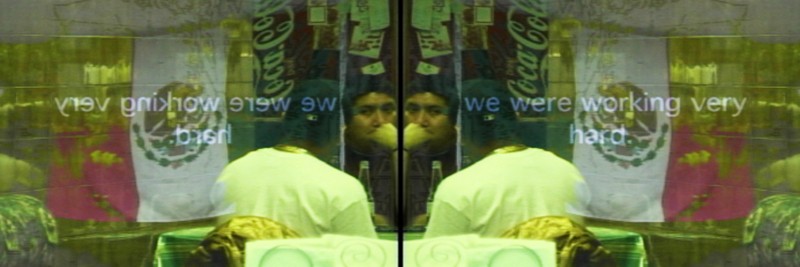
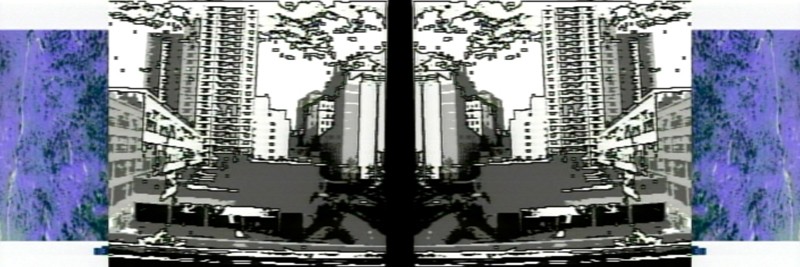
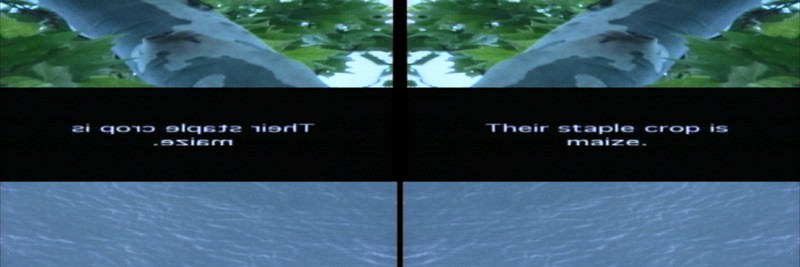
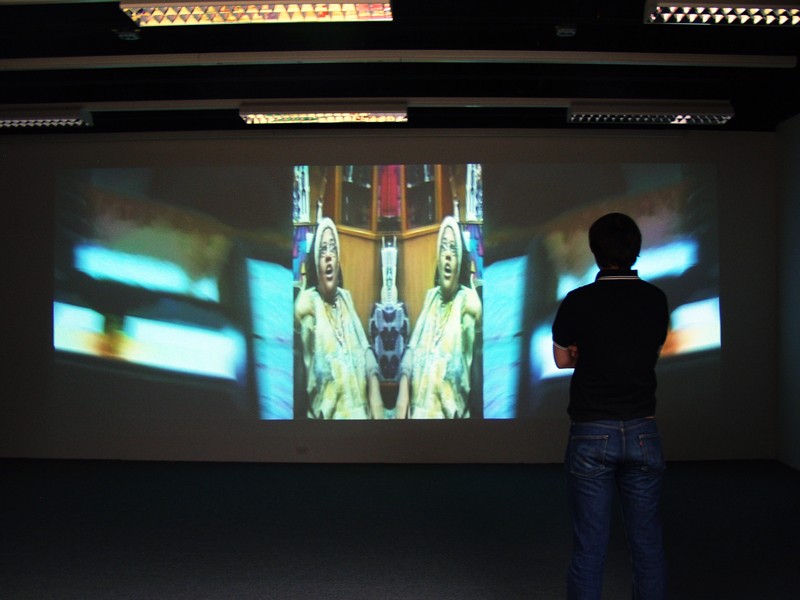
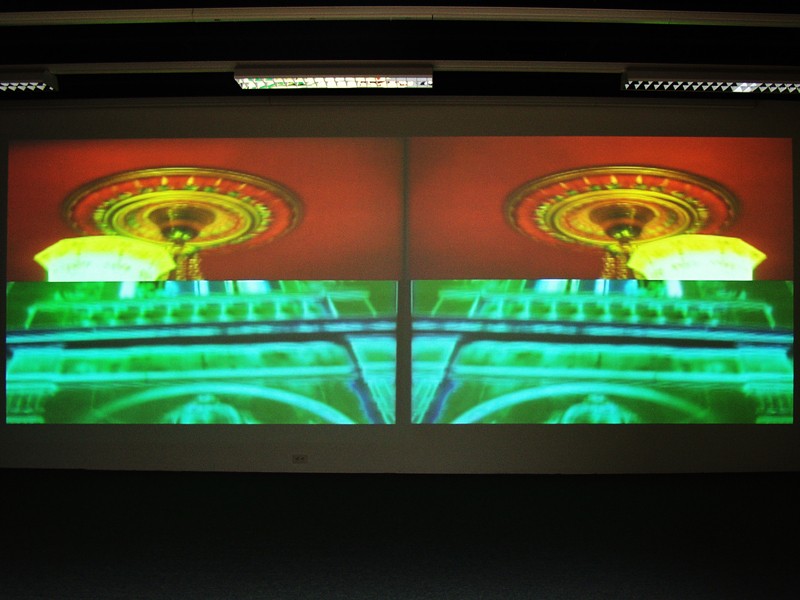
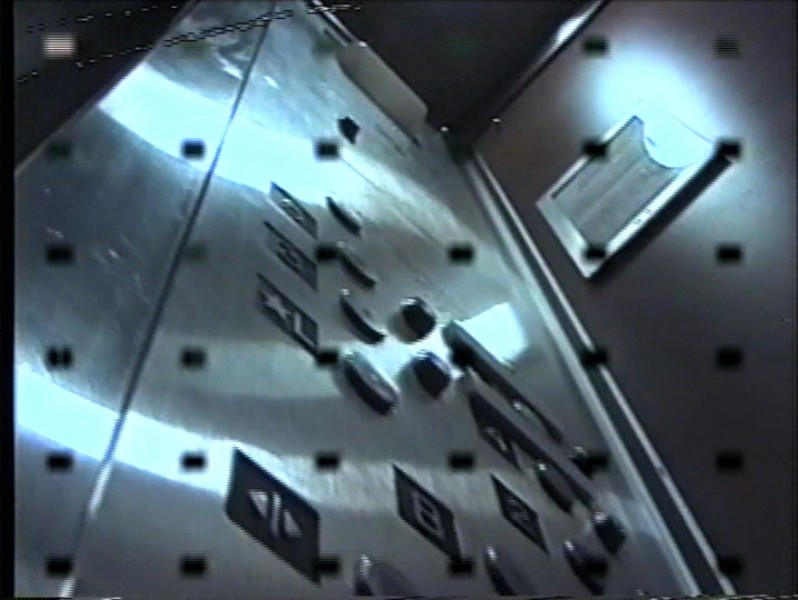
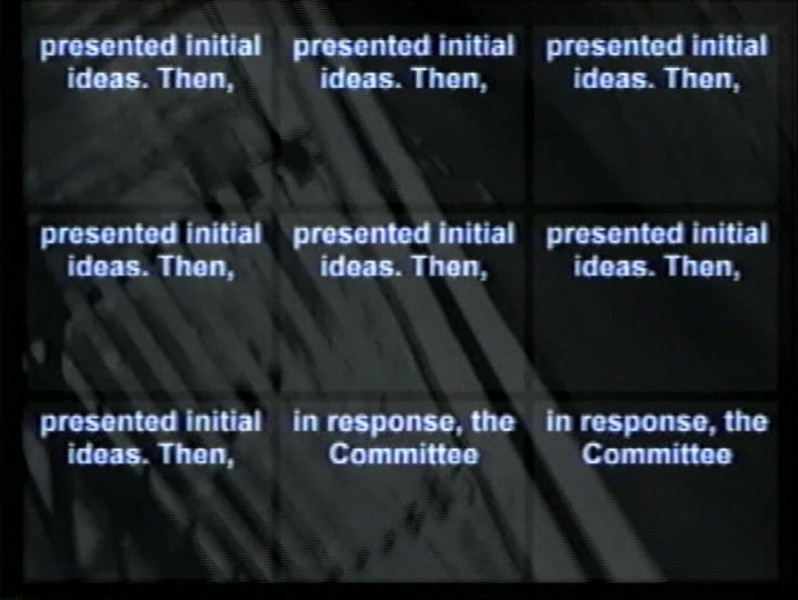
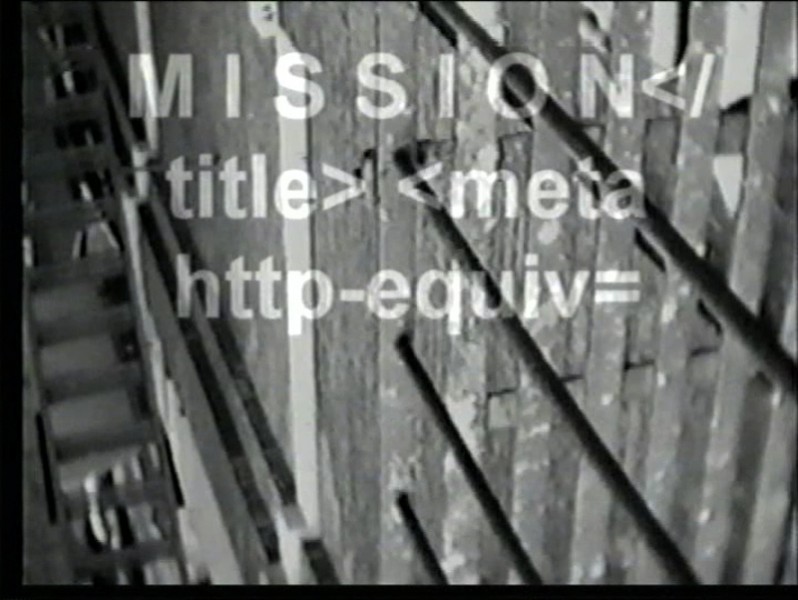
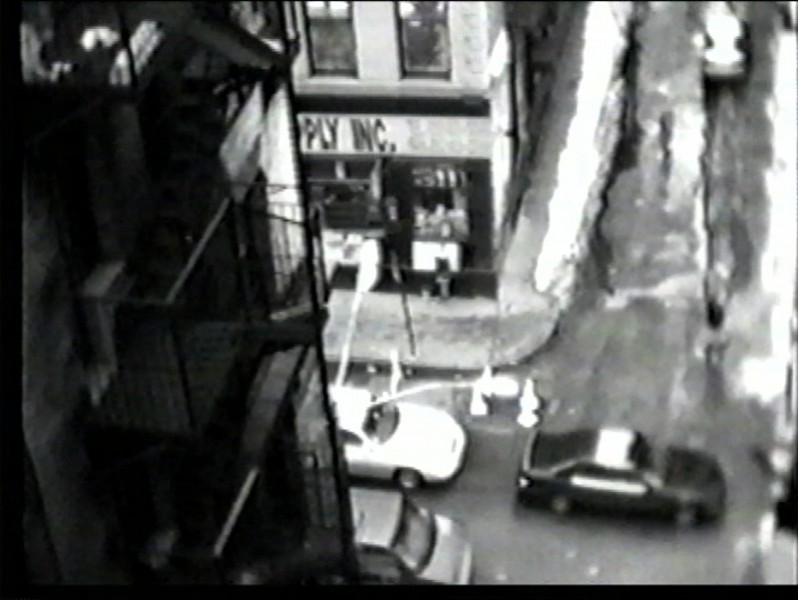
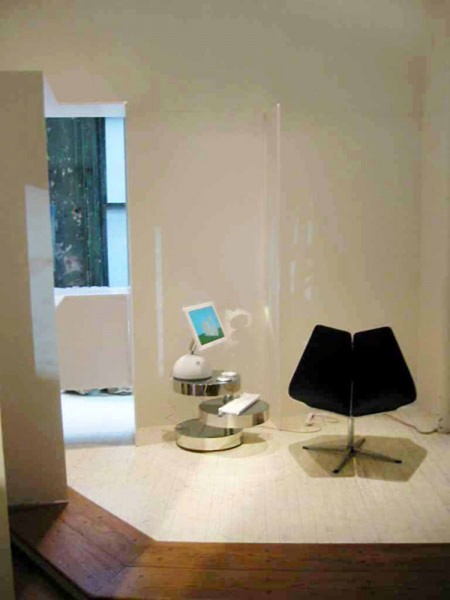
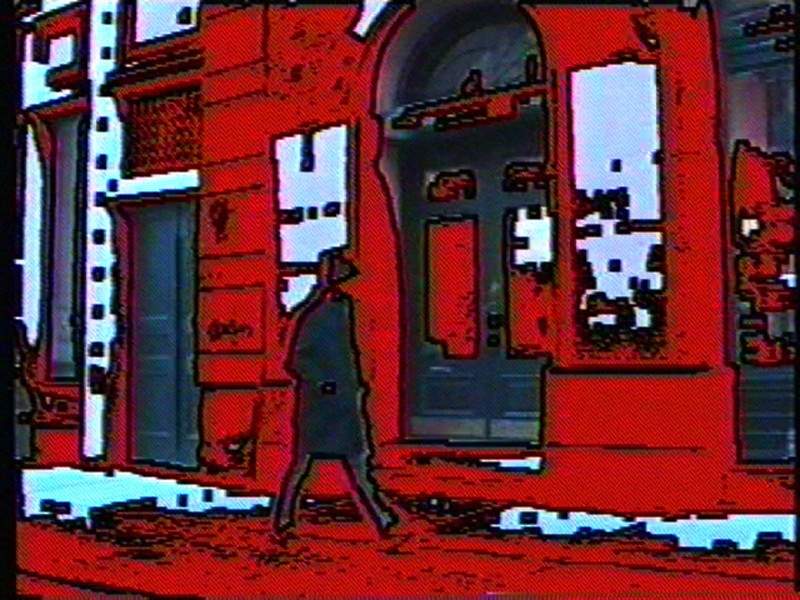
Gai Tong Ap Guong [Chicken with Duck Talks], a one hour long DVD video artwork, presented as a street level art installation in conjunction with Red Dive’s project entitled Peripheral City: City of Refuge.
“The mere smell of cooking can evoke a whole civilization” – Fernand Brandel
“Do not dismiss the dish by saying that it is just simple food. The blessed thing is an entire civilization in itself” – Abdulhak Sinasi
“Sweet, sour, bitter, pungent – all must be tasted” – Chinese Proverb
Video Documentation:
[tubepress video=”73Zh-Gu7Fus”]
Project Description:
Chinatown New York City, the largest Chinatown in the United States, is currently expanding do to a variety of economic and political forces in the city and on the far side of the globe – but how will the gentrification of the whole Lower East Side effect this bastion of history and culture? Since 1878 when the first Chinese grocery store, Wo Kee, opened on Mott Street, and in the same year the U.S. Supreme Court denied Chinese the right to become American citizens, the people of Chinatown have had the dual struggle to both survive on a daily basis and at the same time preserve their rights and culture. In the present moment The Asian American Arts Centre is battling eviction by landlords bent on gentrification. What changes are happening in the neighborhood and how can its value be preserved? What are the simple every day familiarities and pleasures that define culture on a daily basis?
Gai Tong Ap Guong  makes use of audio, video, photography, and puppetry. It combines documentary photographs, traveling imagery of the street level built environment and interviews with the people who live in the neighborhood. Audio and text on screen is in both Chinese and English.
The title refers to a common saying in Cantonese about culture clash. It translates something like “(When) Chicken with Duck Talks (Neither Understands.)” A typical fixture in many restaurants in Chinatown, skinned ducks and chickens, often with the heads and necks still attached, hang in front windows as an appetizing enticement.
Gai Tong Ap Guong uses the traditional saying as a means to pose questions to the local inhabitants about their own neighborhood and cultural change which has occurred or is currently going on around them, and attempts to capture the almost hallucinogenic density of daily experience in Chinatown.
Corky Lee (Additional Black and White Photography)Â
Teri Chan (Interviews)Â
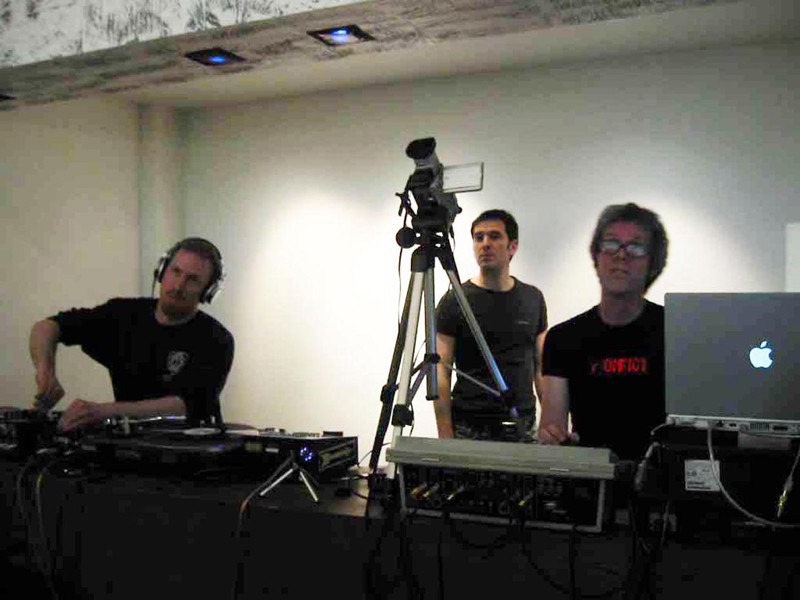
Raul Rothblatt, Eric Jiaju Lee (Musicians)
Special thanks to Maureen, and everyone at Red Dive, and to Mr. Choy, Mark, Mike, and everyone at Silkroad.
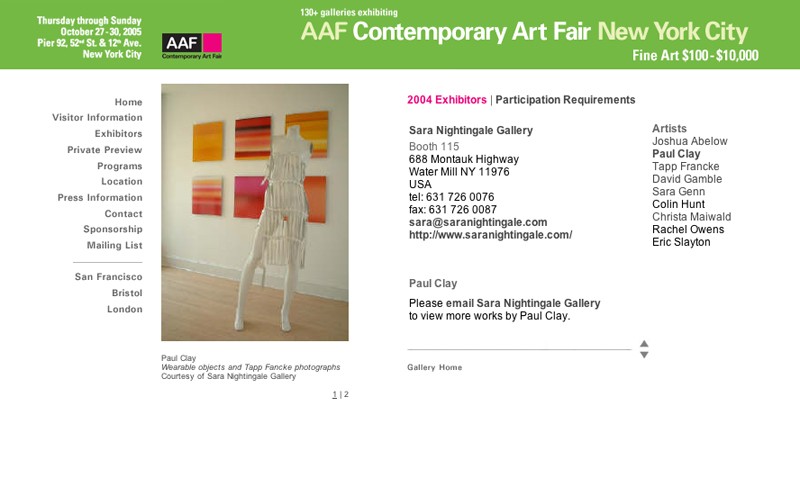
Presented in the group art exhibit “Beautiful, Male, Objects” at Sarah Nightingale Gallery, South Hampton, NY, 2004.
Â
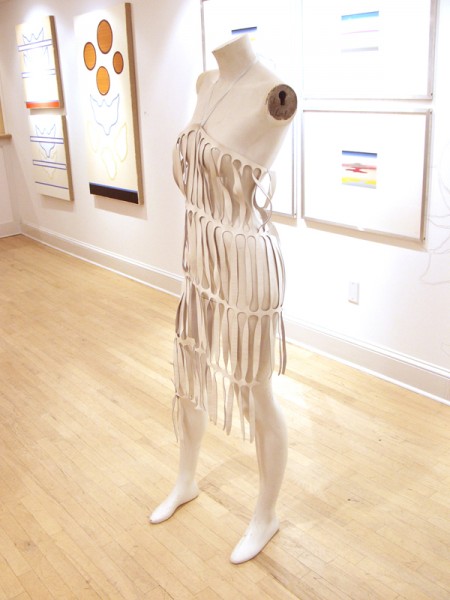
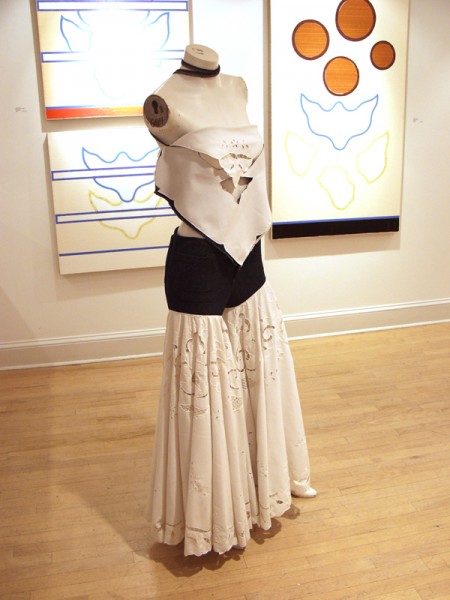
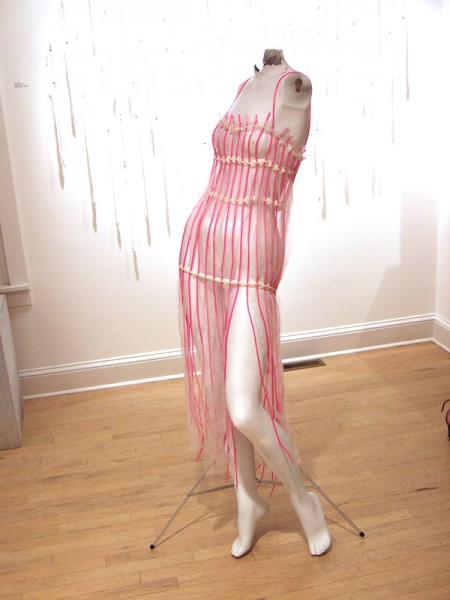
Wearable Objects-Project Description
This work came out of the some of the same set of interests that fueled the Fictive Runway project. I had a continued fascination with cheap found or store-bought items which could be incorporated into contemporary fashion, both to acknowledge their beauty, and also to revalue the lingering traces of craft practices still to be found in mass produced objects.
Watchbandwear: The first of the three works is made from a sheet of white leather, found in the trash on the street. It is from a company that was producing watchbands for children’s watches, and the piece is the left over, after the items were cut from it. The dress works almost like an apron, with a simple ribbon at the back for closure. As a result of the crisscross it also reads a little like lingerie.
Tablewear: The second work is made from two table cloths and a napkin, along with blue jean fabric. This piece has amazing movement properties when worn, with the legs of the pants functioning almost like a bolero dress for flamenco dancing. It also has a “country” feel, but with an exposed back and open slots near the breast and midriff, also reads as sexy club-wear.
Jumpropewear: The third work is made from children’s plastic jump ropes, white trevira voile, and elastic waistband material, like that used for simple cotton underwear. This piece is entirely un sewn, and was made using knitting needles to pierce the elastic band and with the trevira voile knotted to it.
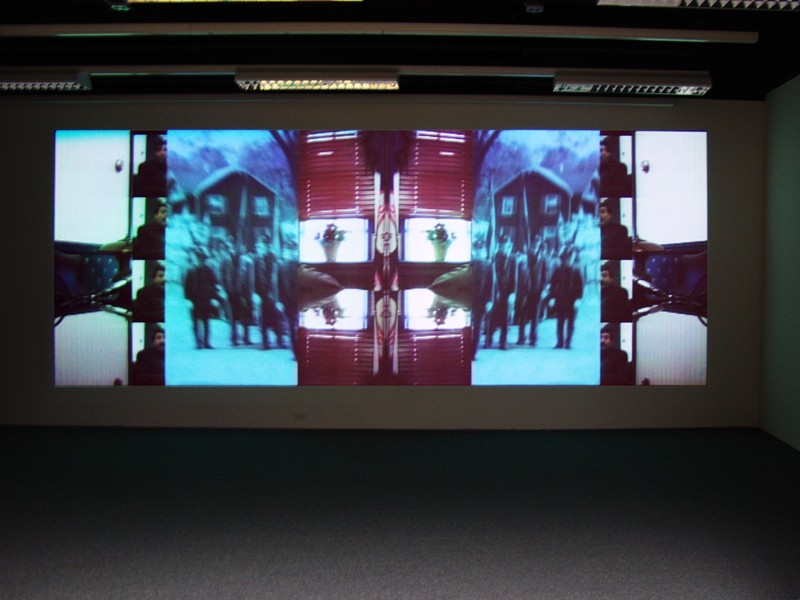
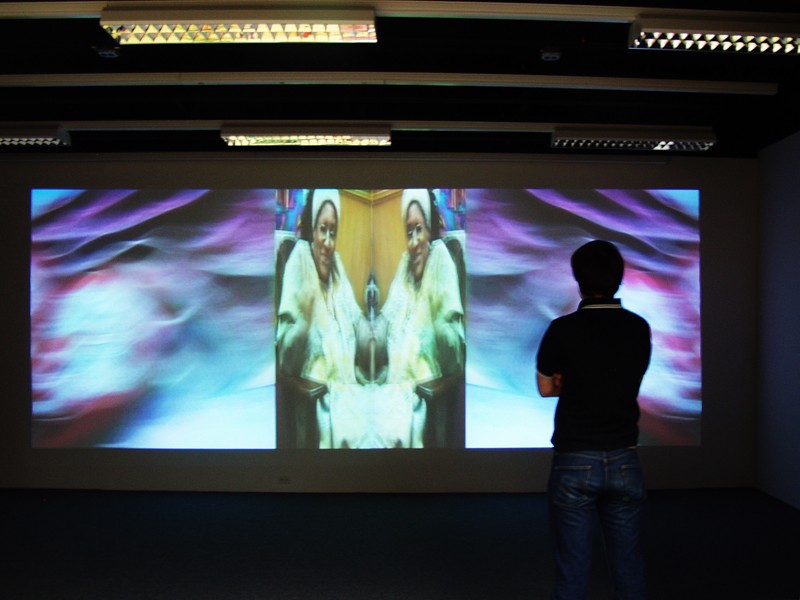
A one hour, two channel video work, commissioned by the Hudson Valley Center for Contemporary Art.
Video Stills:
Photo Documentation:
Video Excerpt:
(Note: Best watched in High Quality – Click video once to play, then after video begins click the “HQ” icon on the lower right. Video will restart in High Quality.)
[tubepress mode=’playlist’, playlistValue=’41558420184570AA’]
Download PDF of the New York Times Review:Â
VIDEO REVIEW; “The History of Peekskill, as Collage” By BENJAMIN GENOCCHIO, Jan 23, 2005
Project Description:
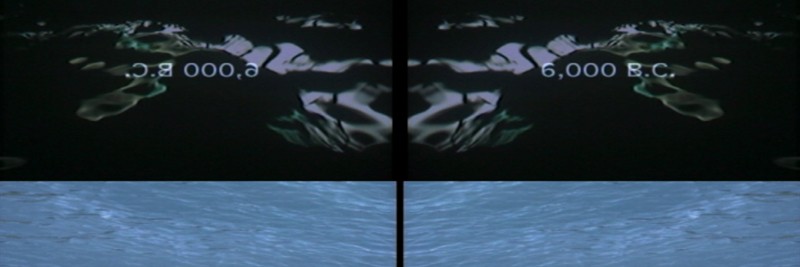
“When We Came” tells the story of Peekskill from the dawn of human beings, and uses the Hudson River as a point of focus. The mirrored video makes reference to water as reflection and to the flip side of history that we are seldom aware of, an angle from which our own language and perceptions seem foreign and “other”.
It begins with the text of an African creation myth from Ghana. Africa – the origin point for human kind. A great number of African Americans originally came from Ghana and most passed through Almina Castle in Cape Coast, a Dutch fort in the slave trade. Peekskill has been a key center in African American development and resistance in the New World since before the Revolutionary War.
The African myth explains the origin of Water Sun and Moon, and why Water still lives with us on the earth. Peekskill is about water, about the Hudson River. It formed from a retreating glacier at the end of the last ice age. It is a New World that has been continuously being rediscovered for the last 12,500 years. The early Native American Paleo People, the Shield Archaic people, the Mahicans, the Iroquois, the Wappinger, and the Kitchawak an Algonquian people, who lived in the town of Peekskill or Sackhoes, as they liked to call it, before the European peoples ever even arrived.
The story of Peekskill is about visitors coming up the Hudson from New York. This includes Jan Peek, for whom the town is named, (“Peek’s Creek” in Dutch) who lived in the settlement of New Amsterdam which was later renamed New York. Jan came up the Hudson to trade with the Kitchawak at Sackhoes. Other New Yorkers also traded goods by boat and later by car and train. They brought ideas too. Young Russian Jewish women fleeing the nightmare of the Triangle Shirt Waist Factory fire and trying to start a better life free of labor exploitation. African Americans coming up from the AME Zion Church, and from Harlem, working towards equality. Soho artists driven out by soaring real estate prices looking for a place to create and express their art.
They came from other places besides New York too. The Italians, the Irish, the Chinese as they built the railroads. The British first to burn the place, and later to establish families. African Americans fleeing slavery in the South via the Underground Railroad. Equadorans, Guatemalans, and others from even further South, looking for a better life.
There is a long and tumultuous history of arrivals in this place, filled with great strife and great beauty. We are only the current caretakers and ours is a momentary passing in the long history of the river valley. The “Muh-he-kun-ne-tuk” – as the Mahicans would call it when they first came 6000 years ago. “The place where the waters are never still”. In this work we too arrive. The strangers, the outsiders, the new comers. We try to document, to make a record, so others who come after can know what we experienced, how we felt. So they might see what we saw – when we came.
Conceived by Paul Clay, Video Mix: Paul Clay,  Audio Mix: Arrow Chrome.
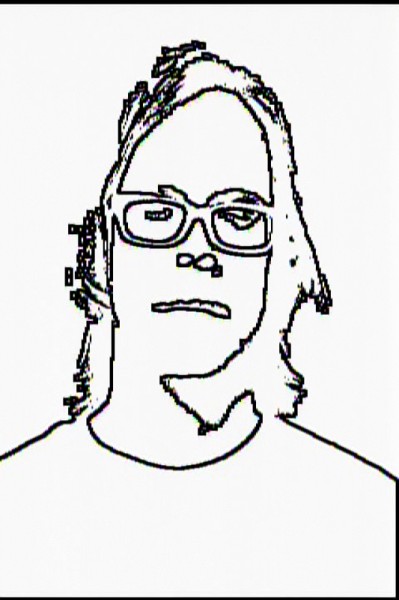
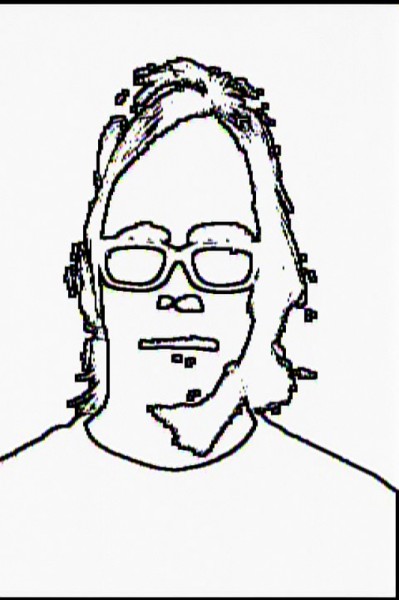
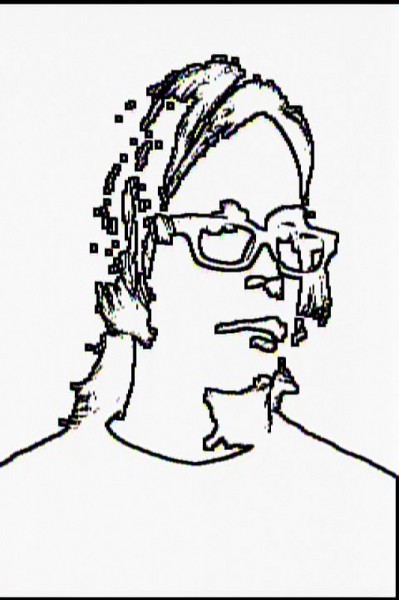
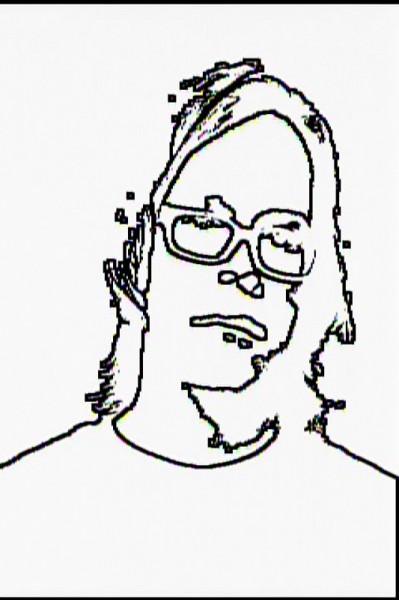
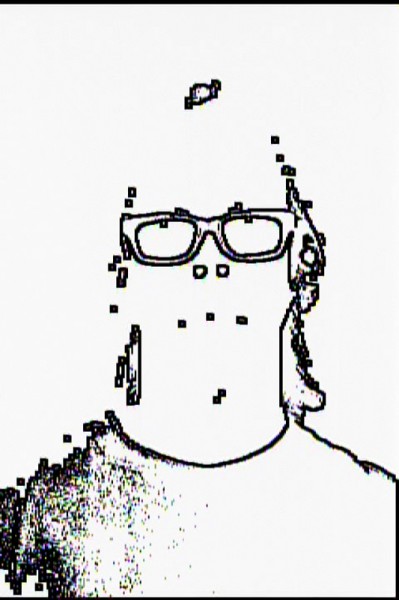
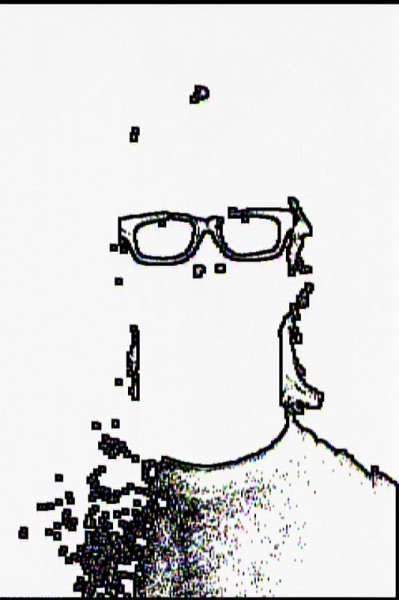
Fifteen minute long, black and white line drawing on video, first presented as part of the group exhibit entitled “Selfish”, at Gallery 128, New York City. The piece created for this group exhibit about self portraits.
Â
Photo Documentation and video stills:
Â
Video Sample:
[tubepress mode=’playlist’, playlistValue=’196C105AC18D1CB3′]
Project Description:
The work was recorded live with the filters which were “drawing” the video and being manipulated live in real time. it plays with the idea of what drawing constitutes in contemporary digital society and of course makes playful reference to Andy Warhol’s 1968 quote that “In the future, everyone will be world-famous for 15 minutes.”
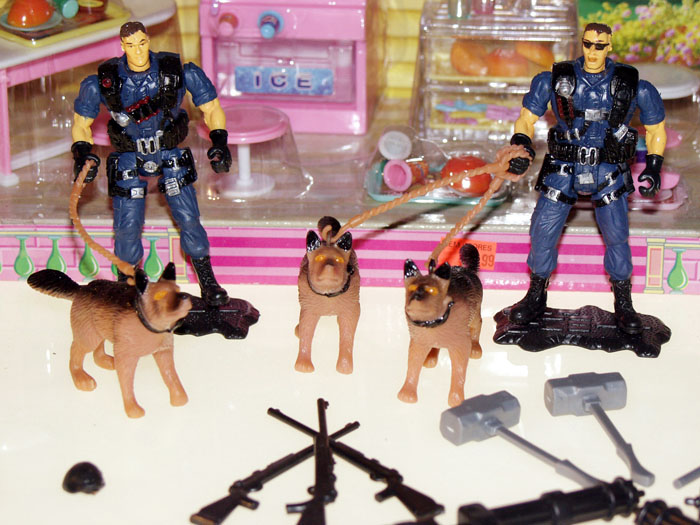
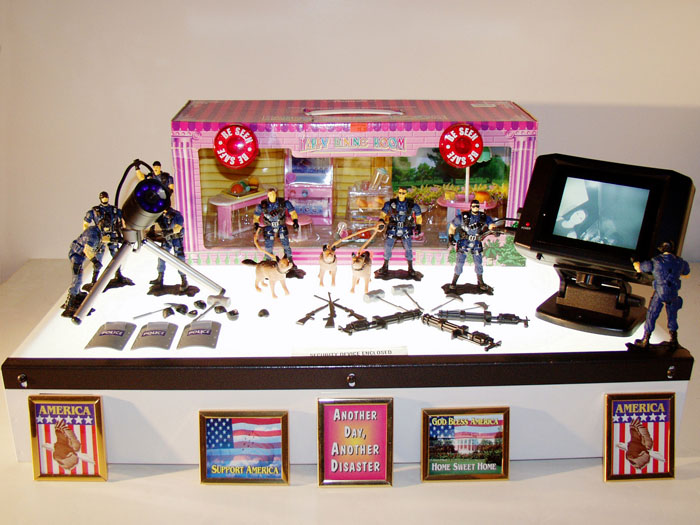
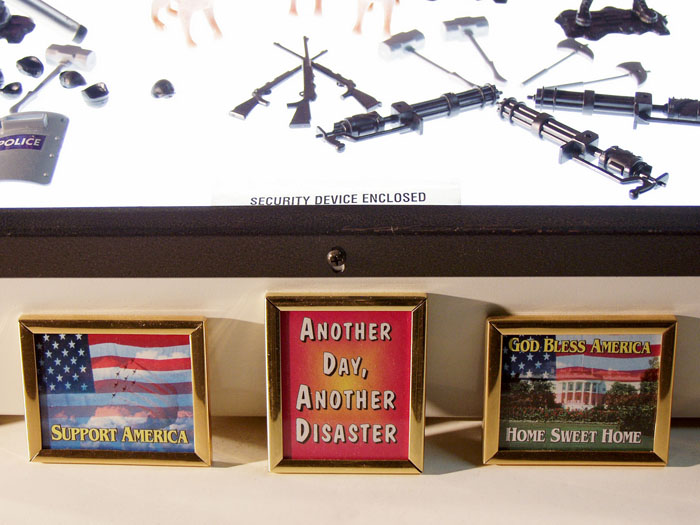
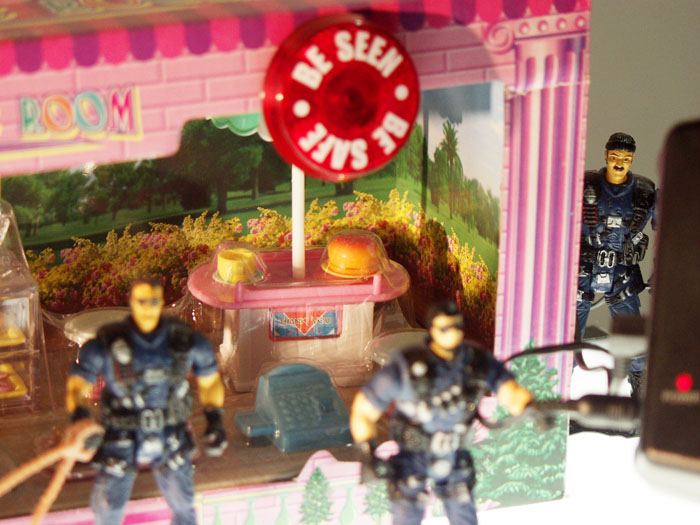
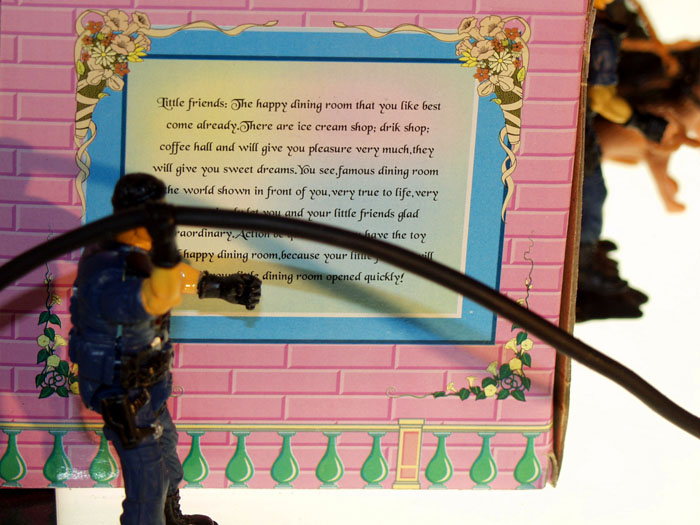
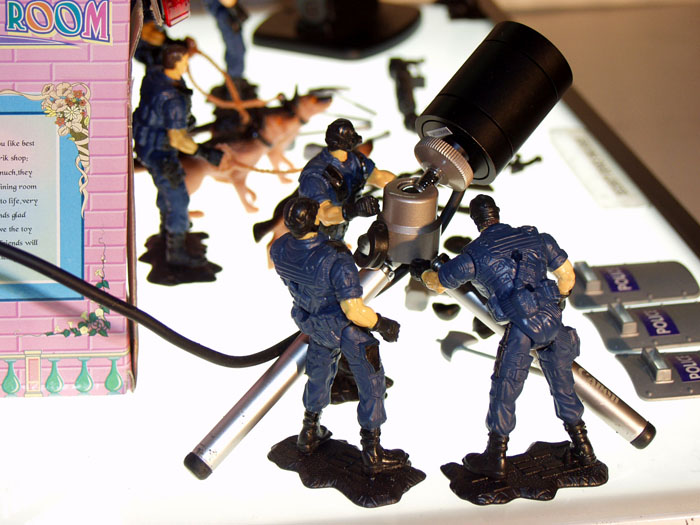
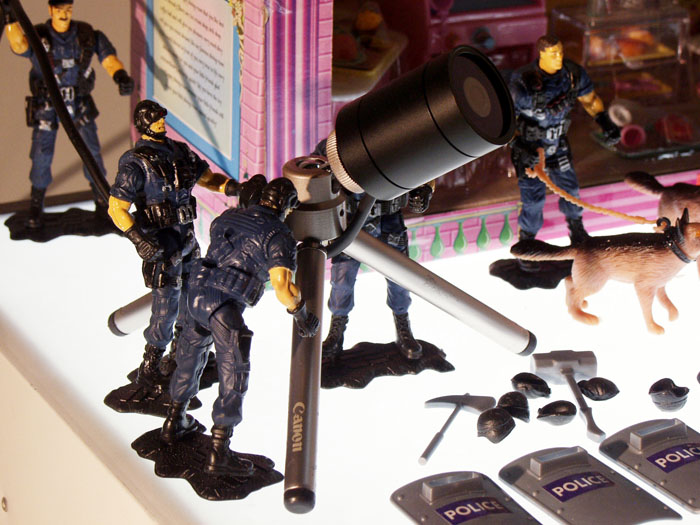
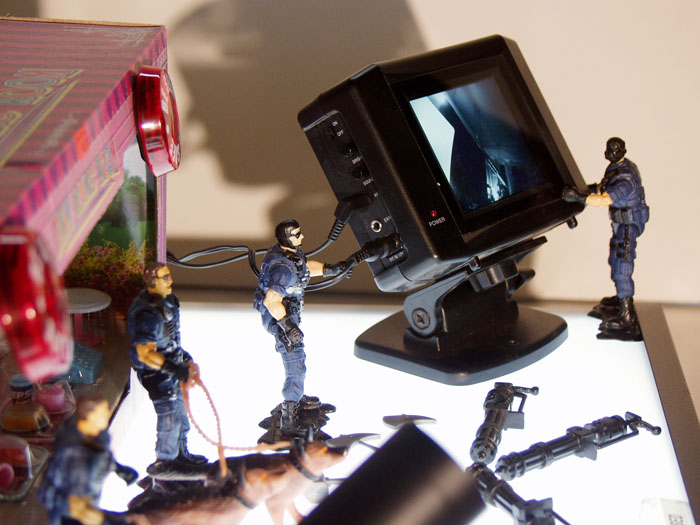
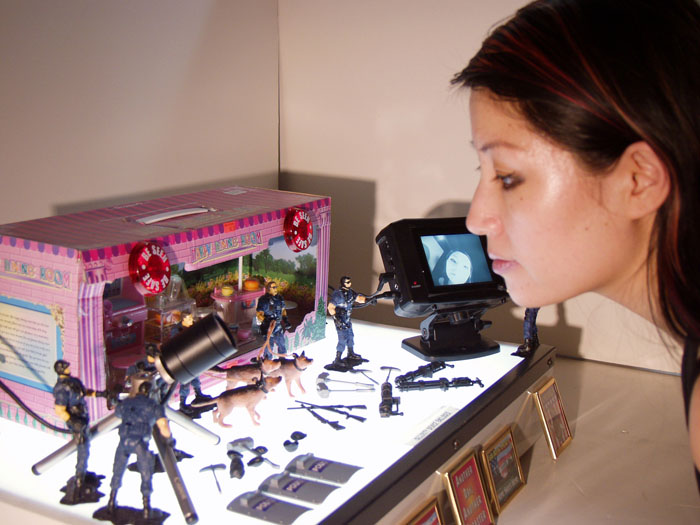
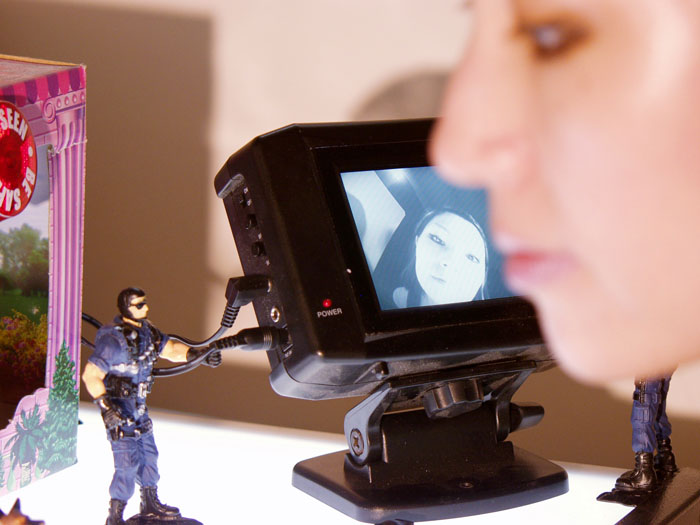
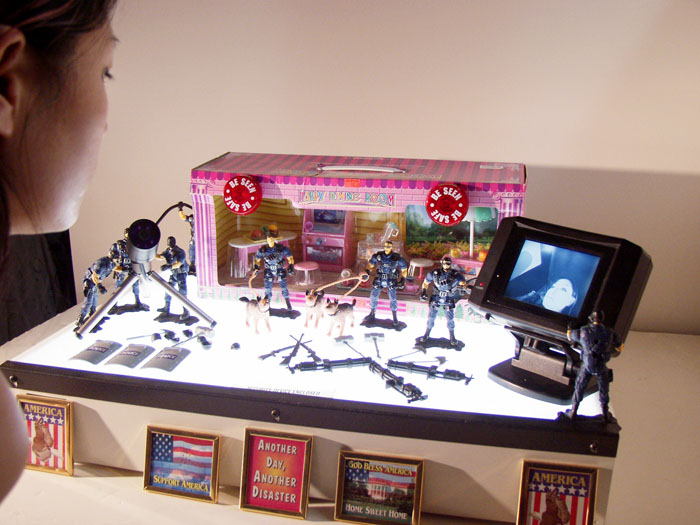
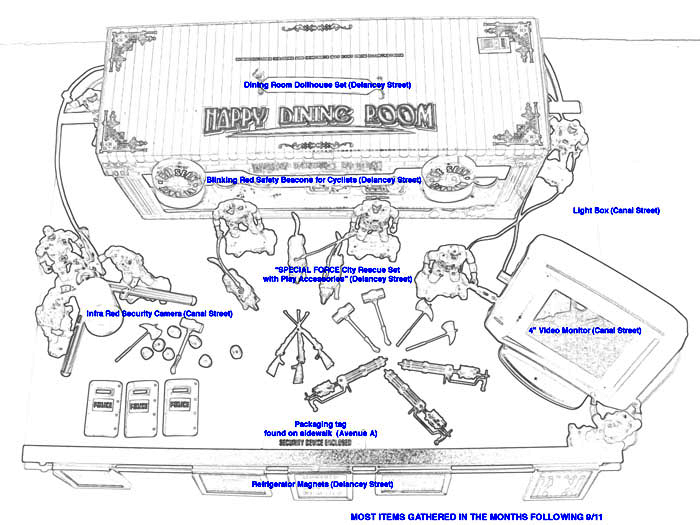
What Makes Today’s Home So Secure, So Appealing? is a 11″h x 17″d x 24″w Mixed media sculpture involving a light box, children’s toys, a working infra red video camera and 4″ monitor.
Â
Project Description:
Coming to my art studio in the Lower East Side a day after 9/11, I had to pass two different police road blocks. At the second one an officer stopped me. Ten minutes later someone else on duty let me pass. I was grateful, but chilled by the experience. Who was in charge? What rules were they following? The security was for my safety, yet was directed against me. I had a sudden gut impression. What if a totalitarian state seized control of this nation from the inside? The rhetoric would still all be pro America, but there would be no free nation left.
Tomorrow seems to have already arrived. Americans detained without due process. Wholesale spying on citizenry. Microsoft’s’ highly touted “Trusted Computing Platform” and “Digital Rights Management” software which assumes every computer owner is a hostile agent. Corporations seizing national assets. World War II Nazi recruitment posters being reused with altered text by the new US Department of Homeland Security. It is a time of heightened terror, and propaganda.
The work’s title references another artwork made in the 1950s, at a previous time of fear and extreme consumerism – Richard Hamilton’s famous work from the Independent Group’s show ‘This is Tomorrow’. The current work is less a reference to pop art and more to some of Hamilton’s methods and concerns. He was part of a group of artists and intellectuals who met to discuss cultural change, the influence of technology, current media and design, as well as the sociology of London’s working class. He collaged together bits of advertising detritus to make powerful visceral work about the culture of the time. He has an acute awareness of, as Michael Bracewell put it, “the usefulness of transgressive or absurd imagery” and a comprehension of the contradictions between our desires and the way we try to fulfill them.
This work also uses bits of consumer culture. The toy figures demonstrate an insane conflation of war and rescue and could never have existed pre-9/11. As though we were “Godzilla, King of the Monsters” (released in the US in 1956, the same year as the Whitechapel exhibit), the puny if musclebound toys fixate on the viewer with their “cannon” tripod, shoot the viewer, and capture her/him on video. They use power and control to preserve the homeland, and the domestic sphere – with its sinage trumpeting happiness, but completely encased in plastic packaging, a shiny highly protected, surface. An actual separation from our homes and lives and loves could happen, and for some it has already. The full extent of terror may just be getting started, and the most frightening possible outcome is a time when there is no longer a strong, free and democratic nation to oppose it. It is the manipulation of our collective fears which makes this false “security” seem so appallingly appealing.
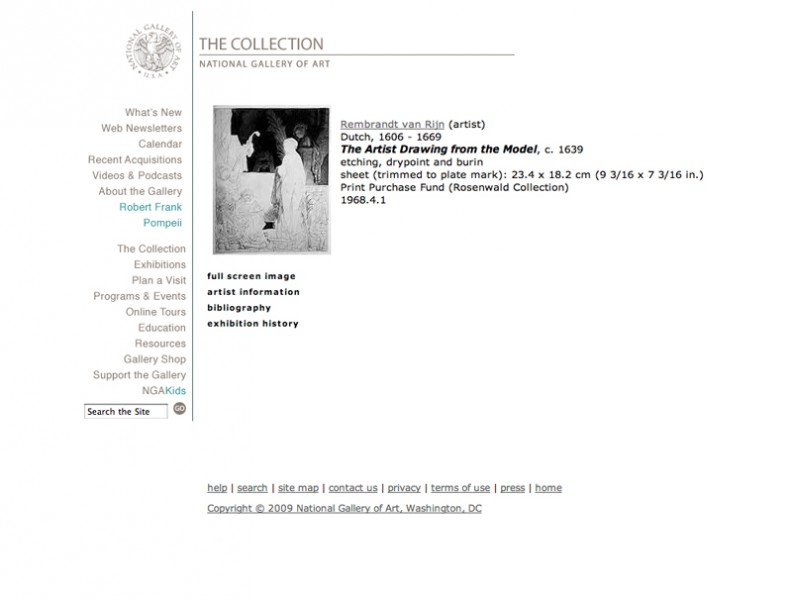
The Artist Drawing from the Model (HTML image tag for an unfinished work)
Presented in the group exhibit “Shared” – organized by Mark Power
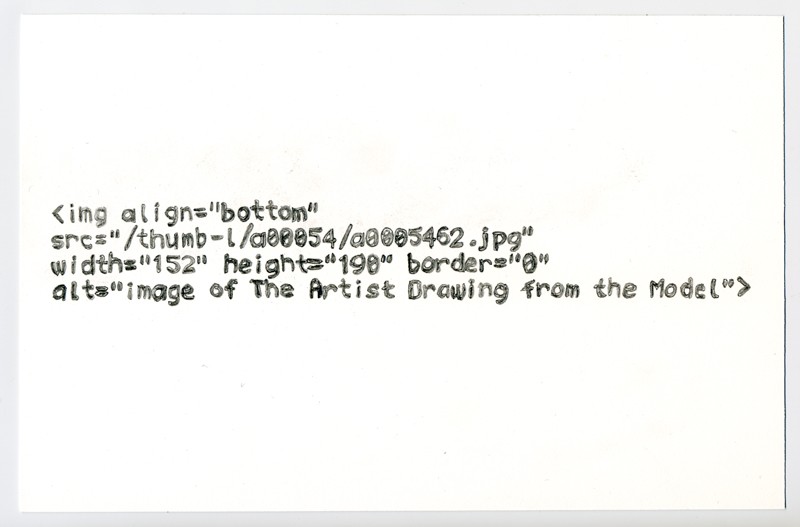
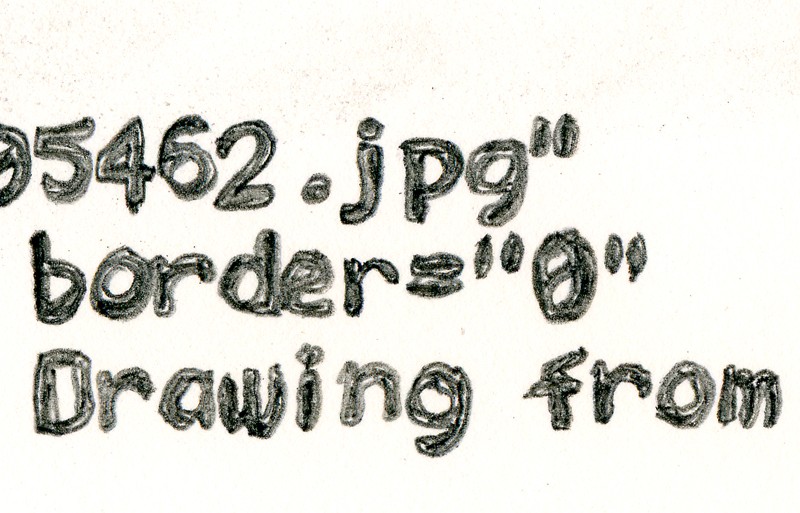
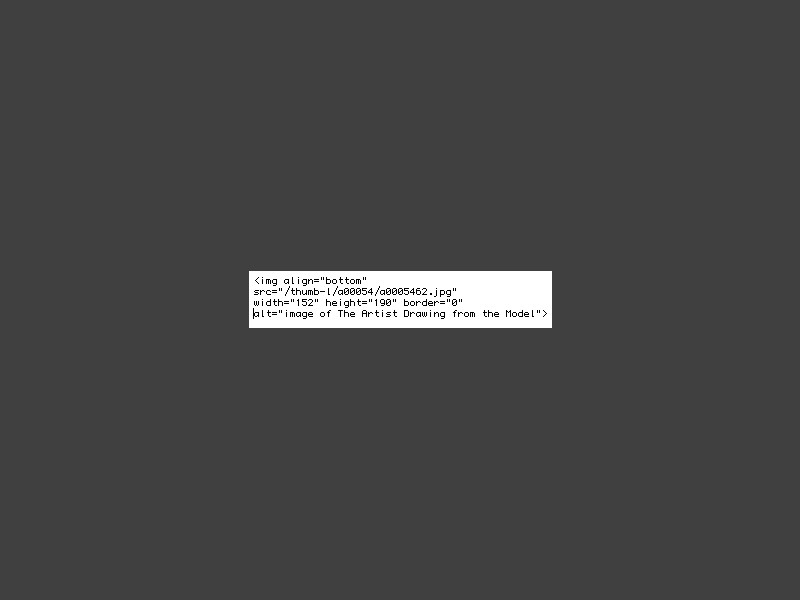
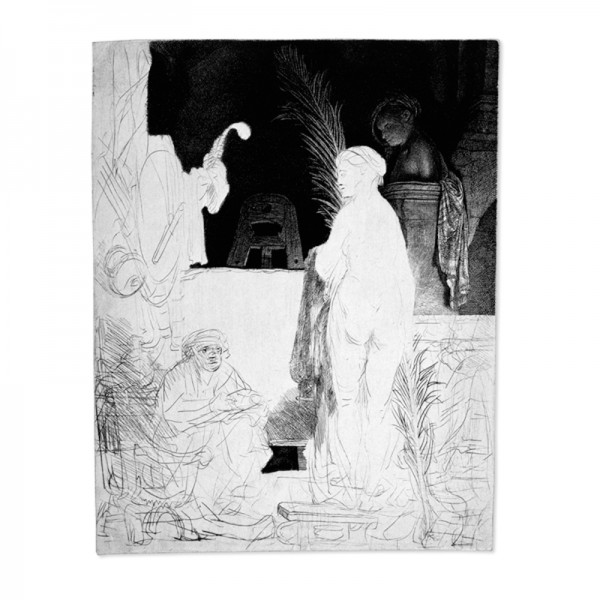
A Graphite drawing on paper, of the invisible HTML image placement tag for a jpeg of the following drawing: “Rembrandt van Rijn, Dutch, 1606 – 1669, The Artist Drawing from the Model, c. 1639, Â etching, drypoint and burin, sheet: 23.4 x 18.2 cm (9 3/16 x 7 3/16 in.), Â Print Purchase Fund (Rosenwald Collection), 1968.4.1, from “the collection” directory of the National Gallery of Art, Washington D.C.’s web site.
Original URL: http://www.nga.gov/cgi-bin/pinfo?Object=50563+0+none
HTML Code Snippet:
<img align=”bottom”
src=”/thumb-l/a00054/a0005462.jpg”
width=”152″ height=”190″ border=”0″
alt=”image of The Artist Drawing from the Model”>
Project Description:
It is a kind of take on the Rembrandt van Rijn work and the process of art making, but it is also intended to explore some of the issues of what it means to be an artist today.
The work references the unfinished etching by Rembrandt and the invisible information tags or code which instruct web browser software how to draw web pages. The Webpage itself is unfinished until the image associated with the tag is added, completing the composition.
With his etching, Rembrandt was in the process of creating a kind of quintessential popular image of the “artist”, and the artist in the image could be Rembrandt himself, as the working figure bears some resemblance to his other self portraits. The artist is drawing the model while surrounded by the paraphernalia of the studio, and immediately behind him, a large unpainted canvas rests on its easel.
There are other references as well. In the right background is a sculpted bust covered over with a cloth. The model stands on a low platform while holding some fabric and a palm frond. Common enough props, but also visual suggestions that, even though the artist is drawing rather than sculpting, Rembrandt, the history painter, is working with the idea of Pygmalion.
It is Pygmalion’s story, in a round about way, that leads to the inspiration for the 2004 artwork. Pygmalion, legendary figure of Cyprus, is referenced in Ovid’s Metamorphoses,book 10, in which he is a sculptor who falls in love with a female statue he carved out of ivory. According to Ovid, after seeing the Propoetides prostituting themselves, Pygmalion is ‘not interested in women’, but his statue is so realistic that he falls in love with it. He offers the statue presents and eventually prays to Venus who takes pity on him and brings the statue to life.
The story of living statues has parallels with Daedalus, who was said to use quicksilver to make his statues speak, and Hephaestus, who created automata for his workshop, and even Pandora, and the Golem who were both said to be created from clay. Though this is myth, it is inspired by actual fact.
The eastern Mediterranean islands were known in ancient times for their astounding mechanical engineering creations, including what today might be referred to as animatrons or mechanical people. Pindar the Greek poet notes in describing Rhodes: “The animated figures stand adorning every public street and seem to breathe in stone, or move their marble feet.” The Antikythera mechanism, the first known mechanical computer, designed to calculate astronomical positions, was discovered in a wreck off the Greek island of Antikythera in 1901, and is dated to about 150–100 BC.
So in the story of Pygmalion the idea of conceptual or aesthetic creation, engineering and computing, and religious/magical substantiation is all tied together, and comes from the commonplace trope of sculptures so lifelike they are real.
In contemporary society individuation of tasks has continued in a branching process for a long time, with the engineer and the artist seemingly having parted ways. Yet recent technological innovations such as desktop publishing and laptop video production are allowing specializations to recombine, and allowing non specialists to take on tasks previously accessible only to experts.
Further, new technologies are regularly picked up by contemporary artists to create work with. Recent developments in computer code have even provoked engineers and programers to question whether what they are doing can be said to constitute an art form in itself. Â All kinds of media are being used and explored and exploited as art. Thus this snippet of computer code works for a variety of reasons to make an analogy with Rembrandt’s work about artists.
Rembrandt is known for his amazing ability to convey feeling through physical gesture. His work is about an artist drawing, and so I also try my hand at physical gesture in graphite. The text in the 2004 artwork has not been written, but has been delineated by sketching the outlines of the forms of letters and then filling them in. Van Rijn’s work has a meta level to it, with the story of drawing contained within the actual drawing. Likewise the drawing of computer code functions as a meta level for the jpeg image of drawing it refers to.
The copied code for the jpeg from National Gallery of Art site becomes a kind of conceit. The code is about location, position and relationship to surroundings, as well as the fact that there is no border or frame to be drawn around the image. All this loosely relates to the artists surroundings and the unframed canvas featured in Rembrandt’s background. The word “thumb” becomes a synecdoche referring to the artist’s drawing hand. Lastly, the female figure Galatea (“she who is milk-white”), appears in countless paintings of the Pygmalion myth shown from behind, just as she does in Rembrandt’s work. The code referring to image alignment (img align=”bottom”) thus functions as a joking reference to the glowing white ass that becomes the central image in these male dominated fantasies, and equates with the structuring of the viewer’s gaze to align on Galatea’s Bottom.
It has been said that for Rembrandt etching a plate was a process of exploration, not a straightforward transcription. In his work he is considering details for a kind of portrait of an artist. Yet it is not a portrait of what the artist looks like, but rather what his circumstances are, and what drives him.
The drawing of a bit of text with pencil on paper seems hardly a finished work, and the code itself without the final jpeg image inserted would constitute an unfinished web page. In The Artist Drawing from the Model (HTML image tag for an unfinished work,) the project of what it means to be an artist is being worked, and yet it remains unresolved.
“future.surface.(text)ure” Art in General – The Armory Show, New York
Commissioned by Art in General, around the time of its 20 year anniversary, and in conjunction with the exhibit “Reconfiguring Space: Blueprints for Art in General,” which was a two-phase competition to redesign space at Art in General. The one hour long video artwork on DVD served as a multiple released at a benefit in association with this exhibition, and was then presented at Art in General’s booth at the Armory Show.
Video Stills:
Project Description:
future – The time or a period of time following the moment. Events that will or are likely to happen in the time to come. A prospect of success or happiness. Likely to happen or exist.
surface – To apply a surface to something. To work a mine near the surface. For information or facts to become known. To rise to the surface. To come out of hiding.
texture – The feel, appearance, or consistency of the outer part of a substance. A rough or raised finish. The tactile quality of the surface of a work of art.
text – A work, regarded in terms of its content rather than its physical form. A piece of written material regarded as conveying the authentic or primary form. Computing data in written form, especially when stored, processed, or displayed. A script. A work chosen or assigned as a subject of study. A textbook. A passage from the Bible or other religious work, especilly when used as the subject of a sermon, or lesson. From Latin textus ’tissue’, from text – ‘woven’.
future.surface.(text)ure explores Art in General both as a building and as an institution, using the ideas of future, surface, texture, and text. Though non-narrative, it borrows elements of the theories of Mircea Eliade, historian of religion and founder of the Chicago School, to weave an hour long video collage about architecture, time, and meaning. Other influences include Futures Studies, Environmental Psychology and Interstitial Urbanism, recent work on architecture and terrorism, as well as theories of digital and relational architecture.
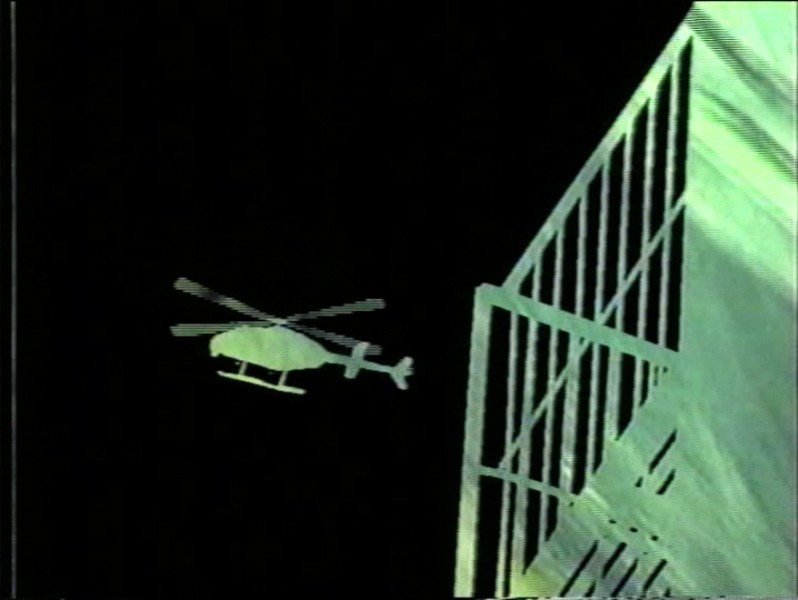
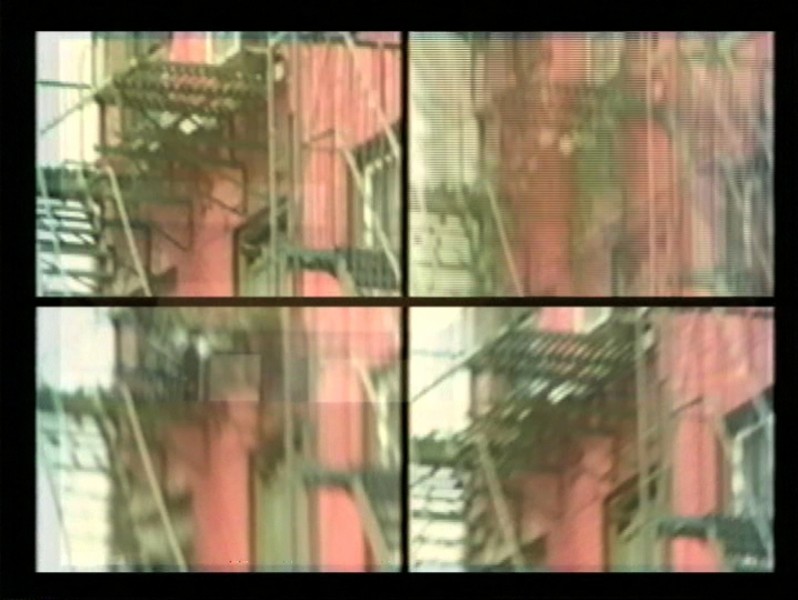
The work applies multiple simultaneous surfaces through video mixing, layering and collage. The images are at times hypnotic and disorienting. They seem liquified, dematerialized, and are used to make the familiar seem strange. Certain qualities in the video even suggest the spy, thriller, or horror movie genres. A man in a trench coat walks briskly past, clutching a valise. The camera in first person perspective, crouches, peering slowly around corners, through doorways, and up staircases. The whole thing has a real, gritty, Downtown New York, Lower East Side feel. Yet it also evokes the future and the digitization of experience.
According to Eliade there are two kinds of time, “sacred” and “profane”. Profane is the mundane everyday existence of linear time with a past, present, and future. Sometimes we can have encounters which take us out of the normal and open us up to another level, or plane of existence – an expanded timeless awareness. Shamans are said to be able to travel to this timeless, sacred, or origin time, but anyone, regardless of religion or lack there of, can have this kind of revelatory experience. When we do, we can be exposed to the fundamental organizing principles of meaning in our lives. The idea is that a kind of axis mundi opens up a transition point between planes of existence. Suddenly multiple times exist simultaneously and a kind of permeable surface opens where boundaries dissolve and we cross over to this other state. A different way in, than using the front door.
For Eliade these sacred crossover encounters or “Hierophanies” give structure and orientation to the world. Profane time/space can only be divided up geometrically, it has no qualitative differentiation and thus no orientation. Treating something as sacred is in contrast to treating something with disrespect, irreverence, or even simply undue familiarity, and it is a way to identify value. As the word “sacred”, in all languages, universally denotes to cut, to set apart, to mark off, then future.surface.(text)ure seeks to make manifest what Art In General is, and what sets it apart.
Futures studies attempts to to gain a holistic and systemic view by examining not only possible but also probable, preferable, and “wild card” futures. It tries to make us aware of our unexamined assumptions through novel approaches. These include “backcasting” which, (unlike forecasting that tries to predict the future based on current trend analysis), approaches the challenge of discussing the future from the opposite direction. This issue of future, time, and alternative approach is very much at the heart of future.surface.(text)ure.
Environmental psychology is an interdisciplinary field and defines the term environment very broadly to include social settings, built environments, learning environments and informational environments which can all be studied together. In the book from the Interstitial Urbanist school of thought entitled “The Ordinary City” the urban world is described as a site of co-presence of multiple spaces, multiple times and multiple webs of relations, tying local sites, subjects and fragments into globalizing networks of economic, social and cultural change. In both areas of study this notion of simultaneous overlapping networks of experience occurs, and the idea is echoed in the structure of future.surface.(text)ure.
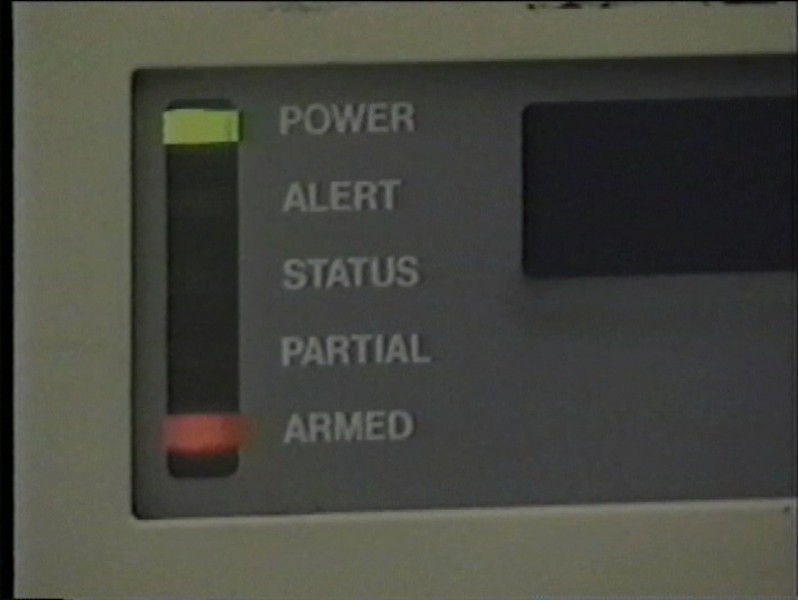
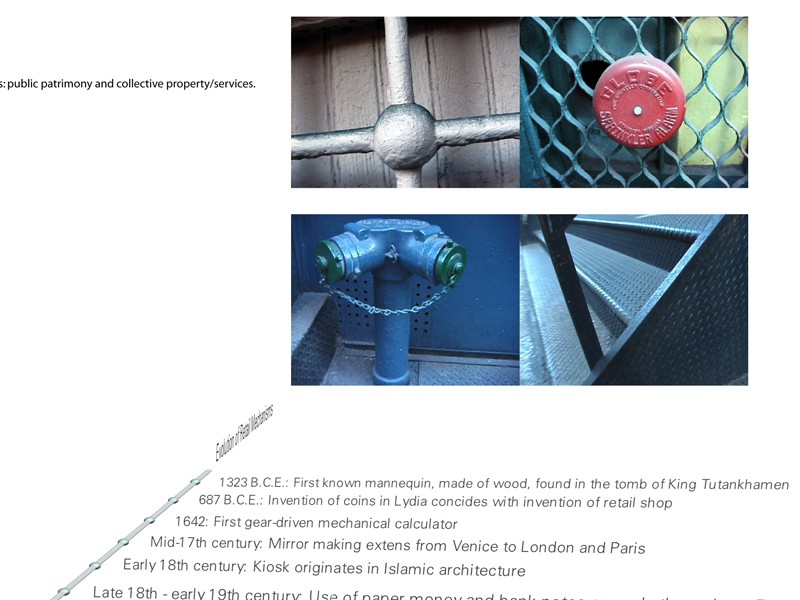
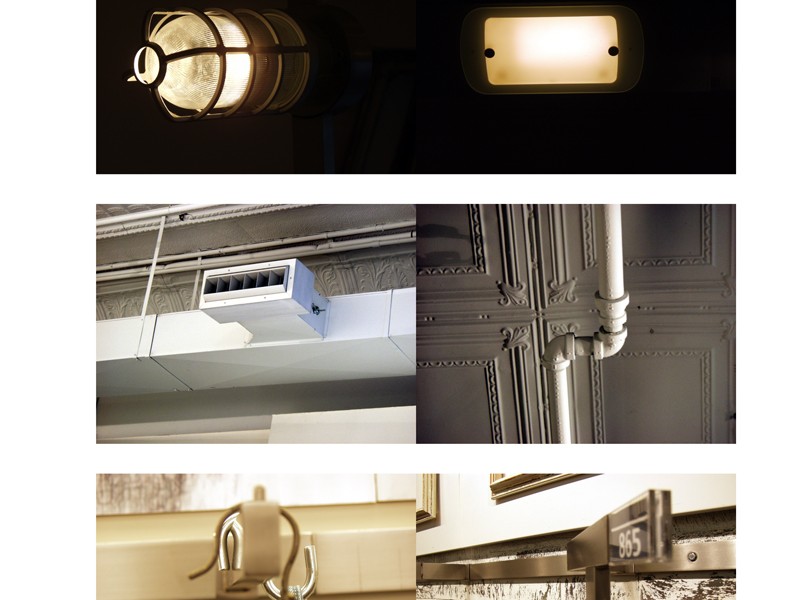
In the post 9/11 world, the danger of architecture being a target for terror resulted in new kinds of urban anxiety. This in turn led to an increase in the sometimes totalitarian technological systems for monitoring and control in the name of safety, and a new kind of architectural paranoia. future.surface.(text)ure focuses on this issue by highlighting related infrastructure such as security monitoring systems with power, alert, and armed status lights, telecommunications wiring, fire extinguishers, fire alarm pull boxes, and even features like the uncommon new frequency of helicopter surveillance in the neighborhood.
future.surface.(text)ure also explores notions of data space, and how Art in General as an entity inhabiting architecture positions itself and networks out into the world, as well as how the institution is working with artists and architects on visions for the future. This includes an awareness of how marketing works as a kind of rewriting and fictionalizing to tell a mythic origin story of an institution. In the video, physical surface texture is divided into grid structures and text pixelates in and out of legibility, suggesting the digitization of architecture and communication.
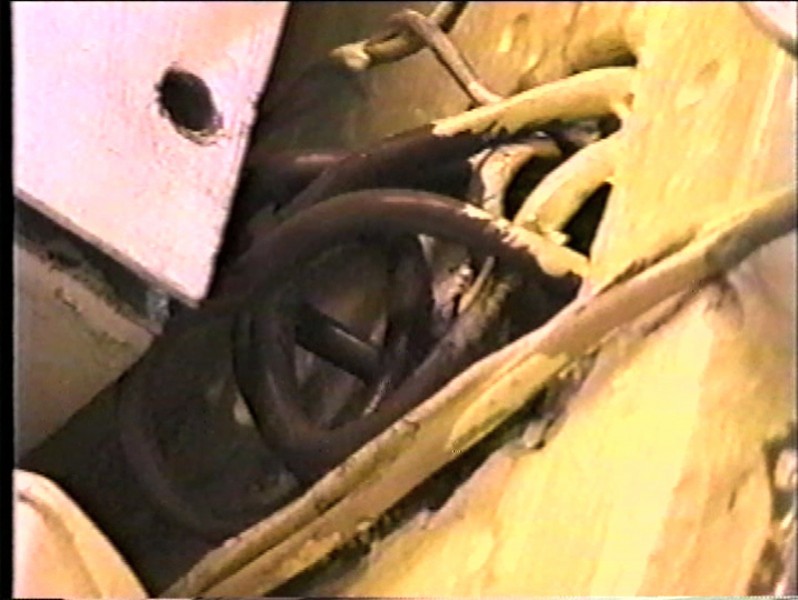
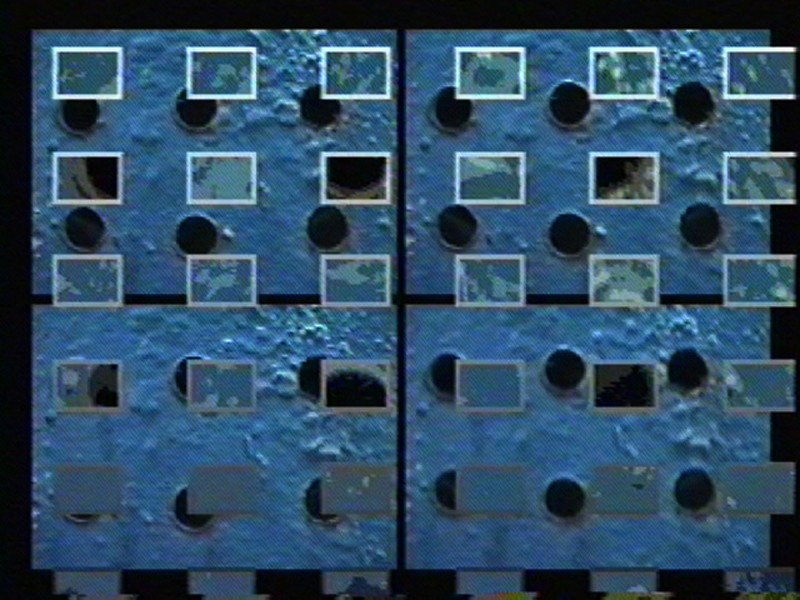
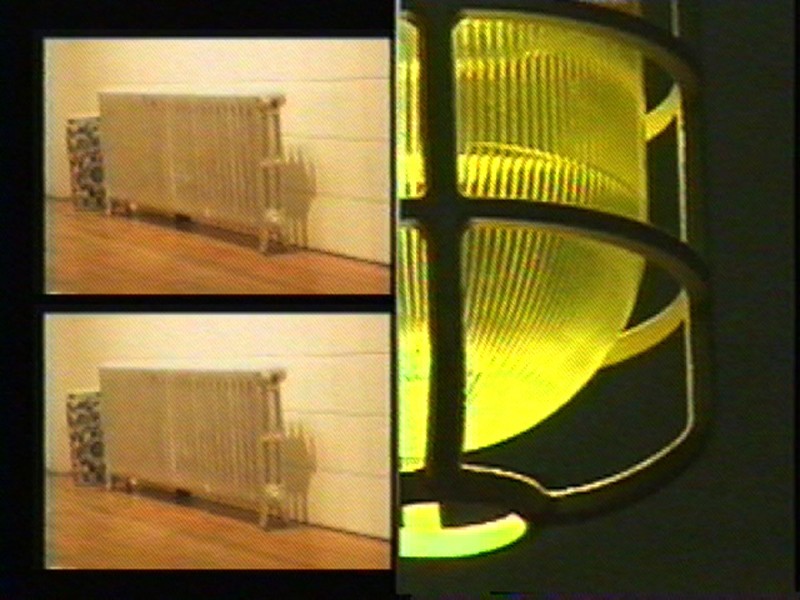
Infrastructure can be defined as the basic physical and organizational structures needed for the operation of a society or enterprise and future.surface.(text)ure focuses, in great detail, on a long list of infrastructural elements including light switches, track lights, water and sprinkler pipes, heating pipes, electrical conduit, stand pipes, fire escapes, stair rails and uprights, signage, rigging hardware, expanded metal mesh window guards and more. It also lavishes extended moments on extreme close ups of basic construction materials including concrete, diamond plate steel, expanded metal mesh, and brick.
Architectural design and urban planning are big subjects but ones which tend to reduce the rich physical materiality of lived experience into a set of restricted concepts associated with design. Buildings become toy objects and fundamental experience is vacuumed away in order to create an efficient and streamlined environment in which to plan. This reduction has many positive effects, freeing the mind, and allowing one to conceive totally new notions about materials and spacial relationships. But it also has a negative side in that we no longer see the “there” which is recorded in memory, the “not new” of the rusting fire escape, and the scuffs on the floor that document the passing incidents of human presence.
In our mundane existence we often see architecture in relation to our immediate use of it, going to a meeting in the office or installing an artwork in the gallery. It is easy forget that the timescale of architecture greatly outlasts us. Urban structures survive on a longer time scale than the “people-years” of the short lived human inhabitants who briefly pass through them.
Through extreme close up videography, cutting, layering, and video filtration, future.surface.(text)ure looks at the social, temporal, and spatial ordering of Art In General. By de-structuring and turning upside down, and inside out, it seeks to reach a new and altered perspective. Lonely, elegiac, contemplative. The video becomes a sacred journey into the heart of this Lower East Side mainstay, to find orientation and meaning.
While exploring the back way of Cortlandt Alley we hear dogs barking, reggae music with it’s relation to spirituality and with its strongly accented subsidiary beat, and we see the puffs of steam rising from vent pipes, and the profusion of steel bars which make up the complex network of fire escapes. As the camera dangles down sixty feet to the street below, swinging to and fro, we can feel the pulse of the city hiding below the surface.
future.surface.(text)ure seeks to provoke an epiphany regarding our place within the larger scale of the physical existence of the city. The minute unseen details of urban infrastructure flow past us, like ghosts in a visual poem about the built environment – an architectural elegy for a lost New York.
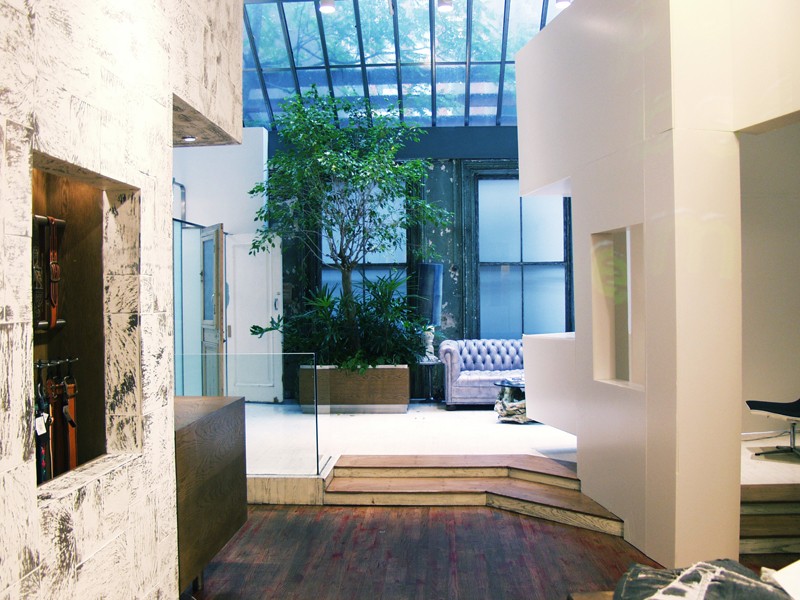
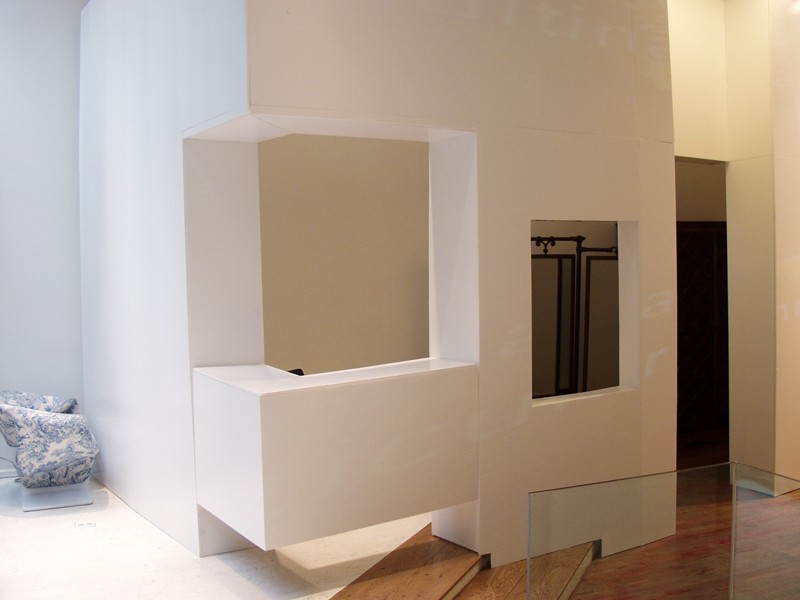
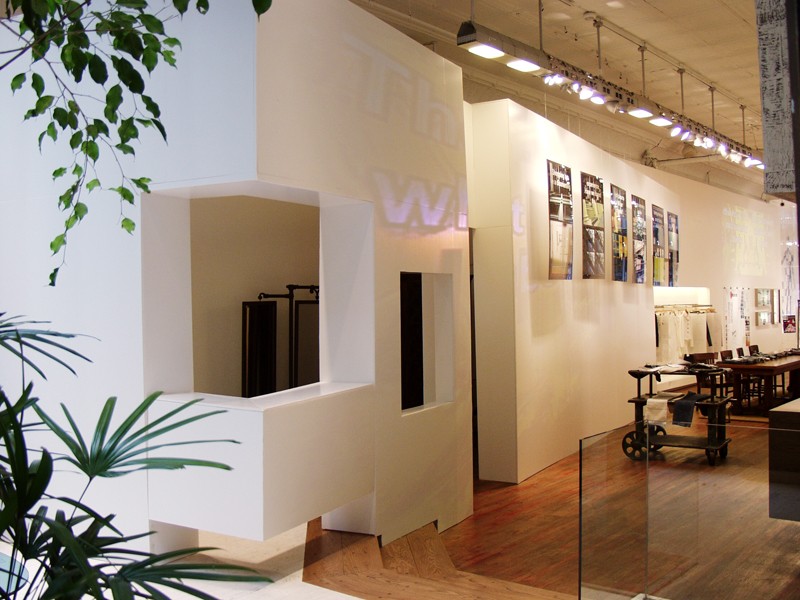
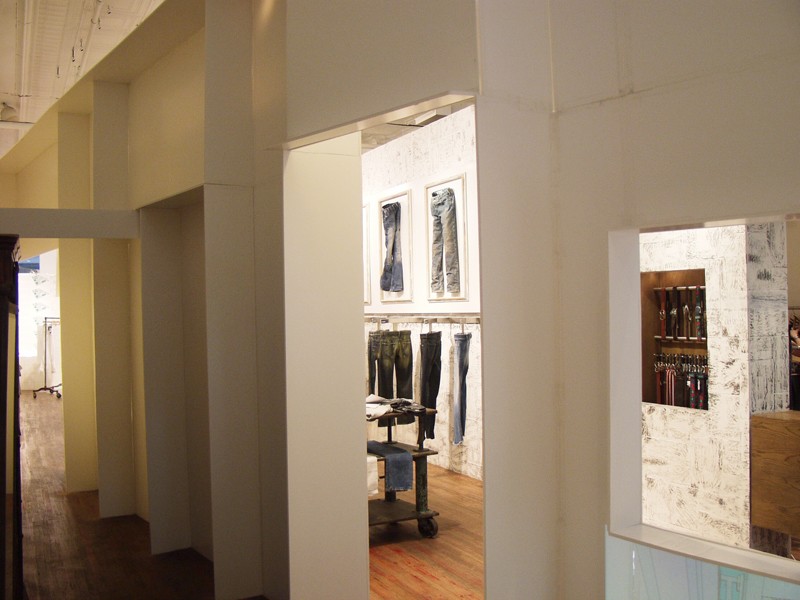
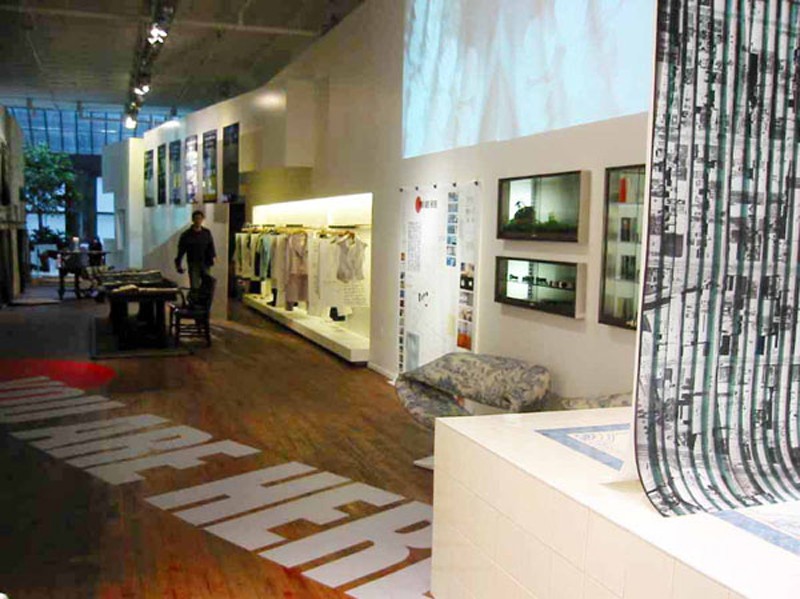
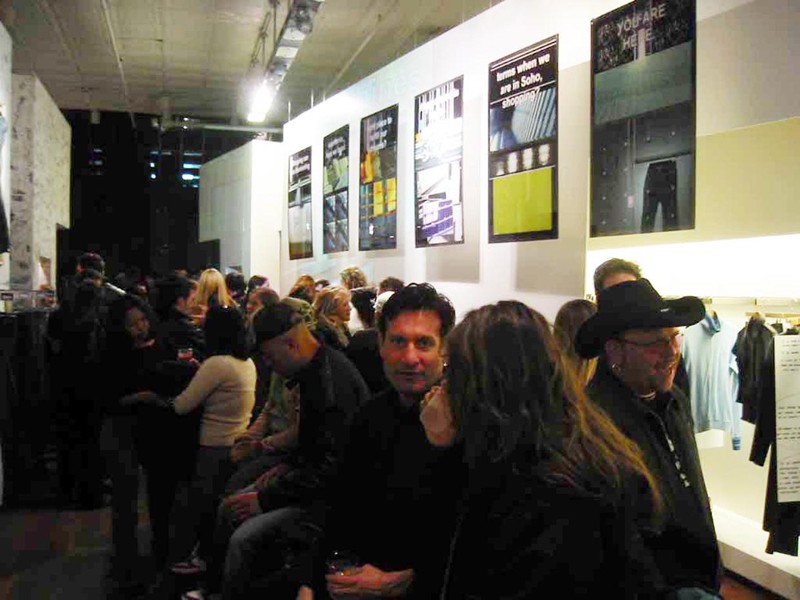
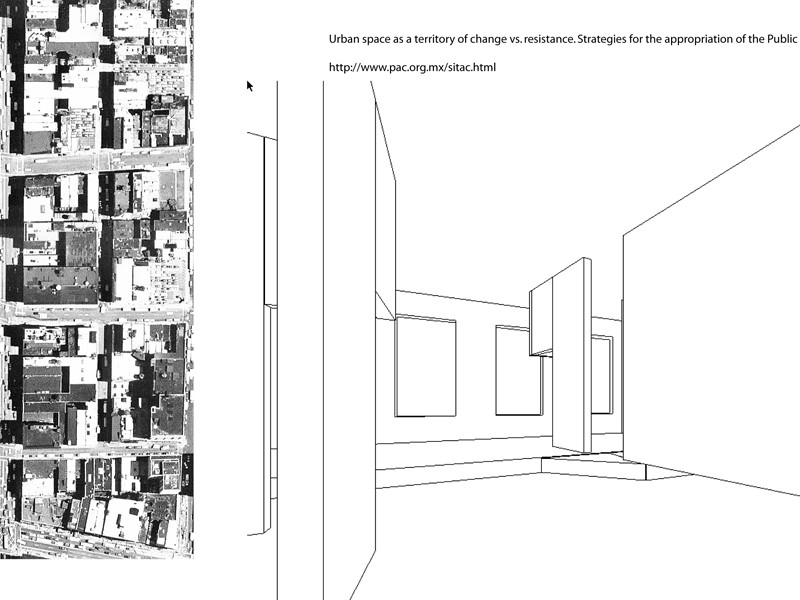
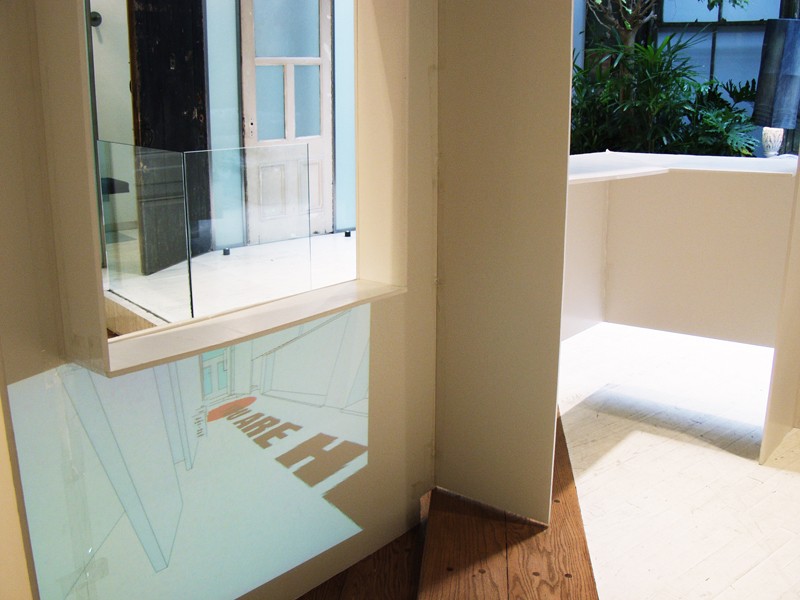
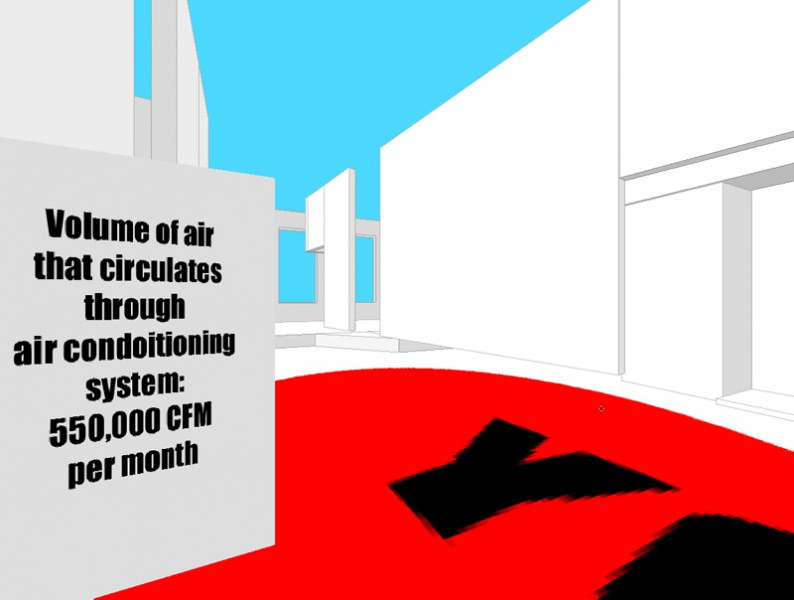
You Are Here – architecture, retail, and locality:  an art installation and live audio/video performance contemplating the neighborhood of SoHo and the nature of shopping and retail design, created for the Diesel Denim Gallery, a clothing store where 70% of the space is devoted to the presentation of art, and which is located in the SoHo neighborhood of New York City.
Â
Project Description:
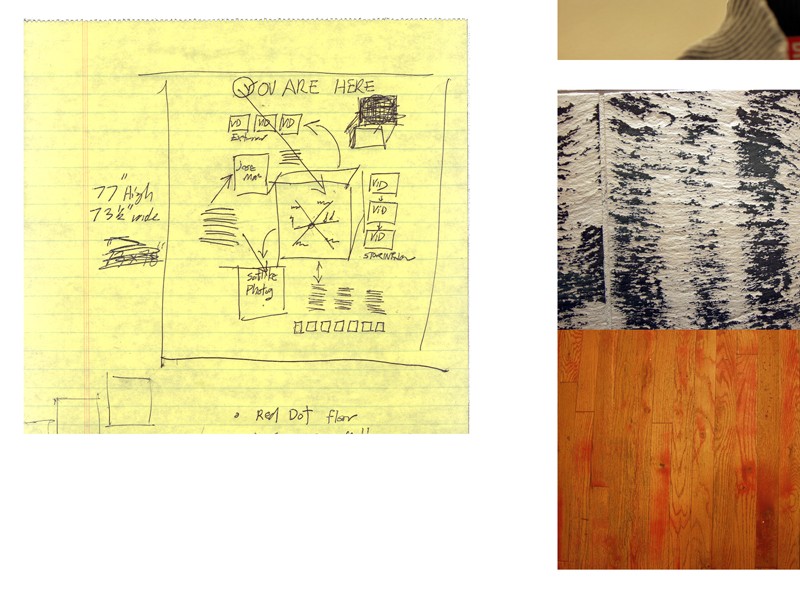
There are seven basic elements of the installation:
1. Foam Core Wall:
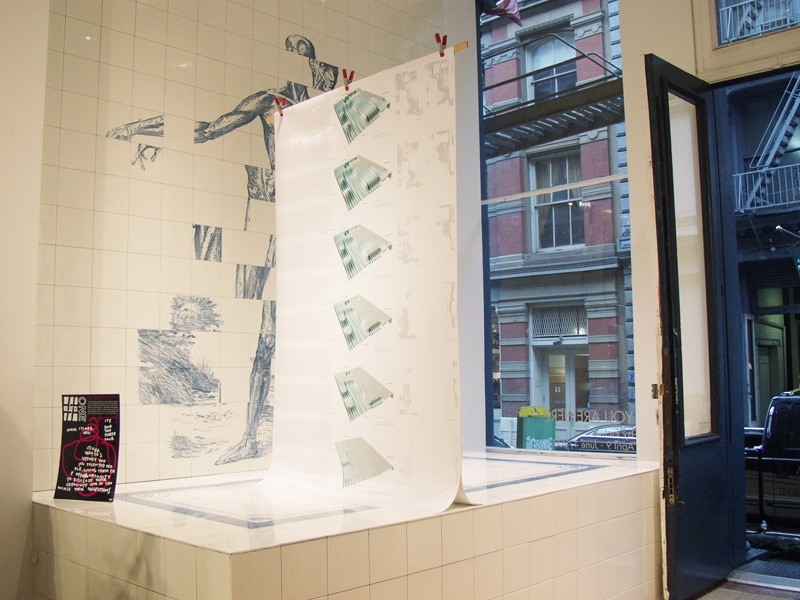
A 40 foot long by 12 foot high fake wall built from 1/2″ Foam core. It is a one to one scale replica of the actual wall opposite to it, but in mirror image. The wall promotes the idea of the store existing as much in the design phase as a foam core white model as it does in the “real” phase. The mirror image is also a kind of reference to the mental inversion of the “Gruen Transfer”.
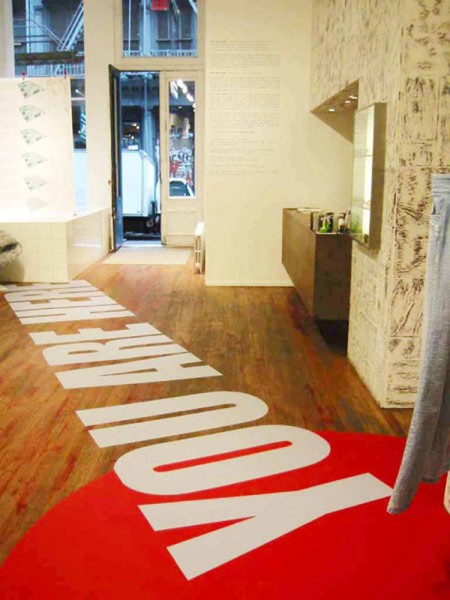
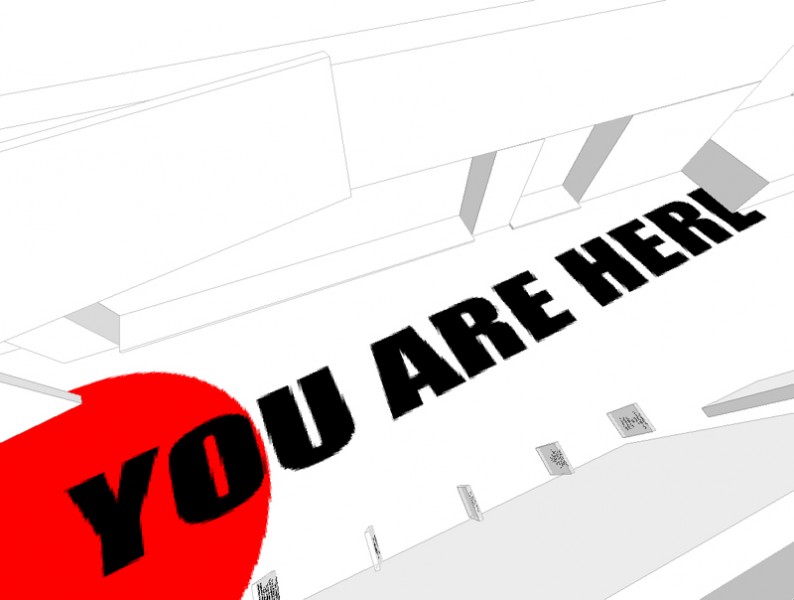
2. Floor Sticker:
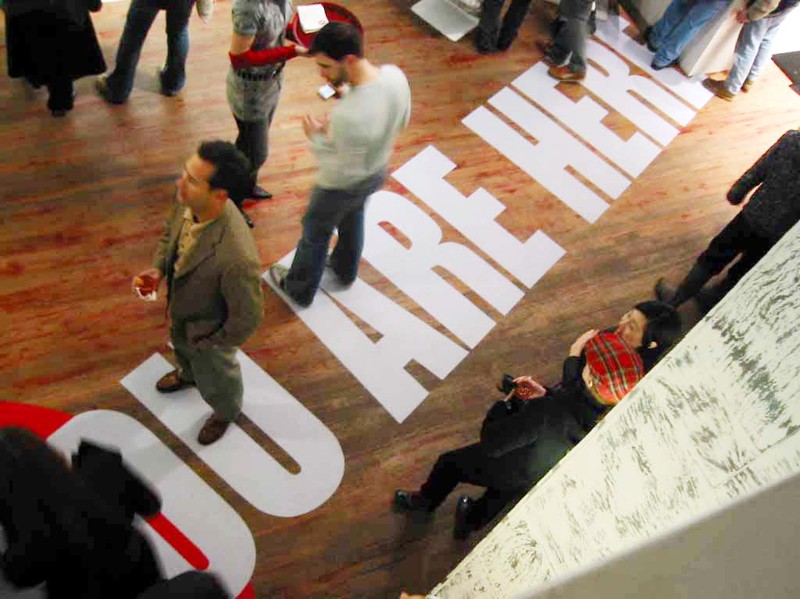
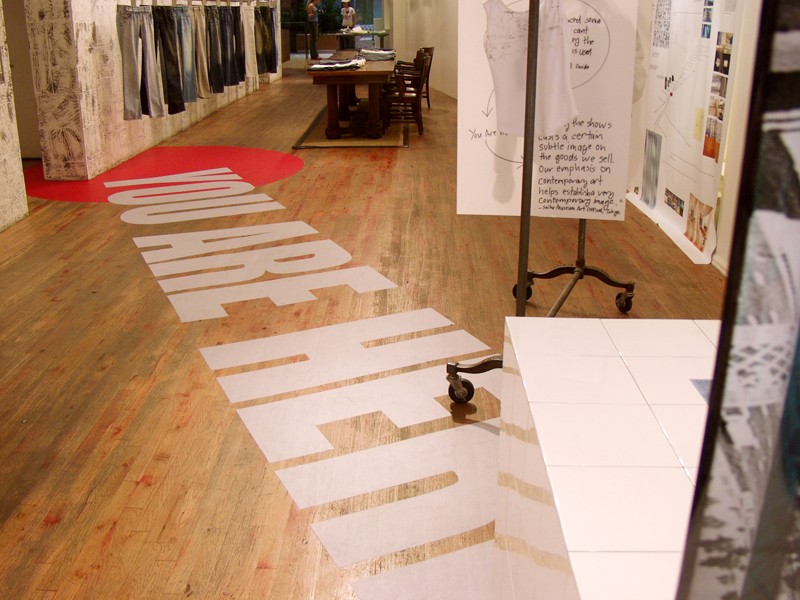
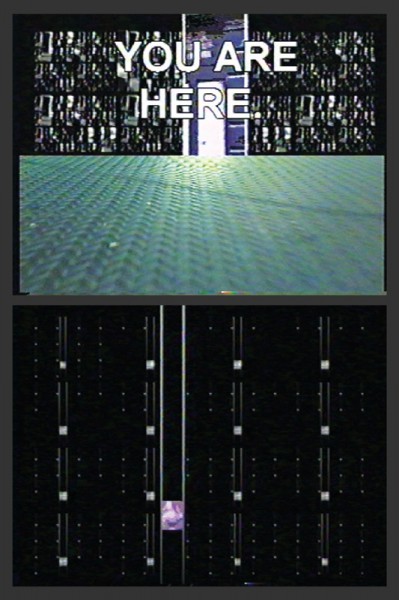
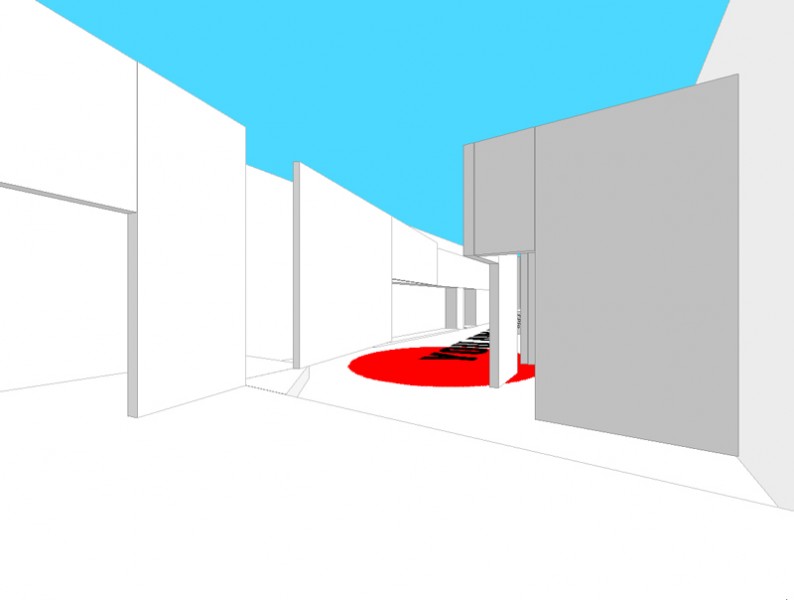
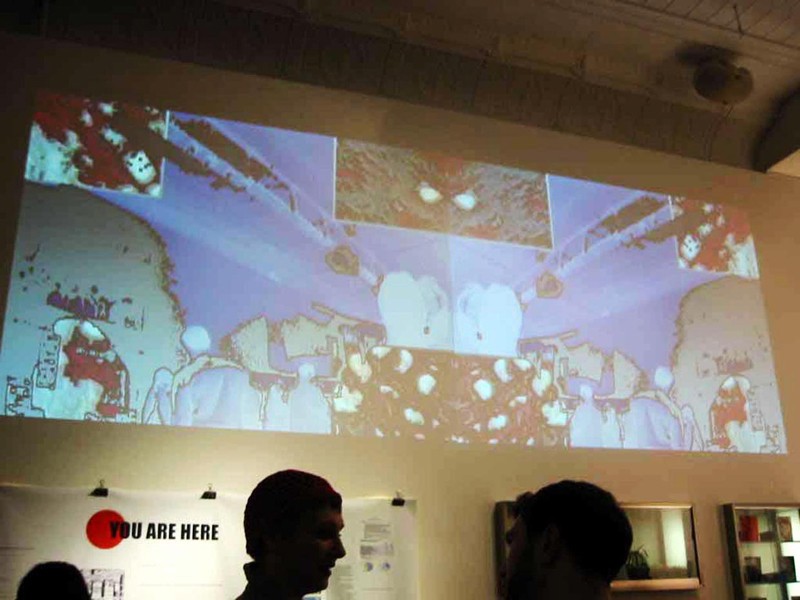
The 22 foot long vinyl floor sticker with a red dot and the phrase “You Are Here” refers to both the placement locator help found on maps in public spaces, but (like the foam core wall) also serves to suggest that the shoppers are not in an actual space but a space modeled around them and to control them. As though they are ant sized in a model box designed to look like a store. The fact that part of the sticker seems to be sitting underneath the actual brick interior wall of the store serves to further dematerialize the structure.
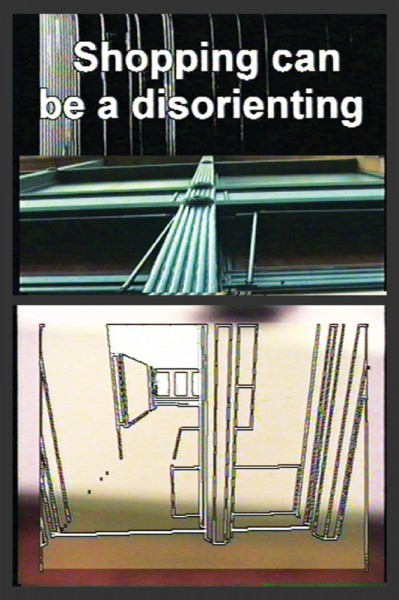
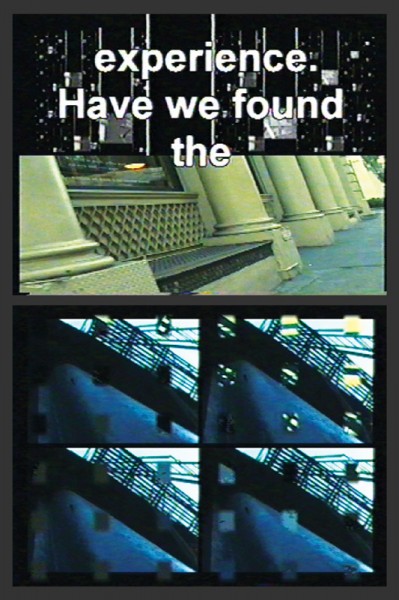
3. Plexiglas Plaques:
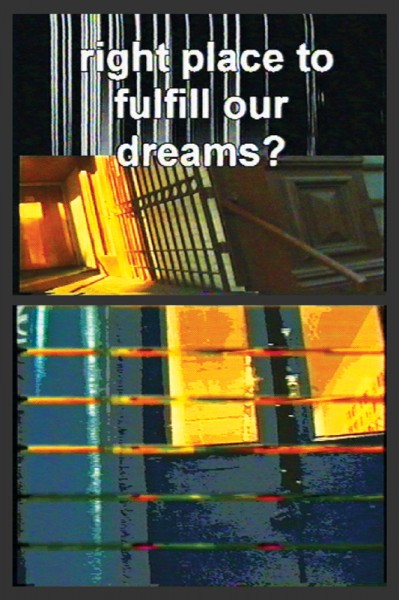
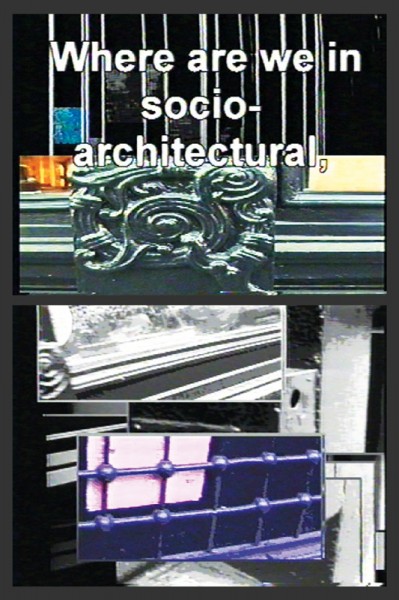
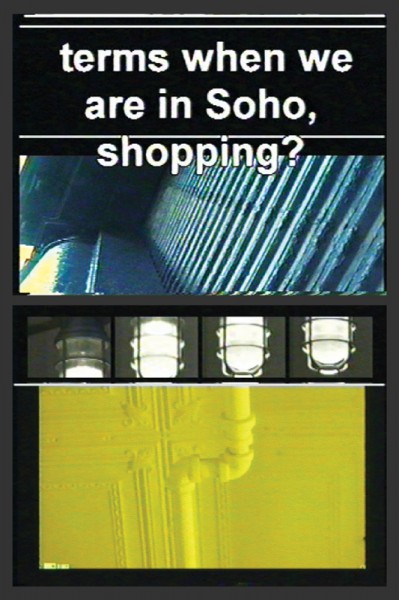
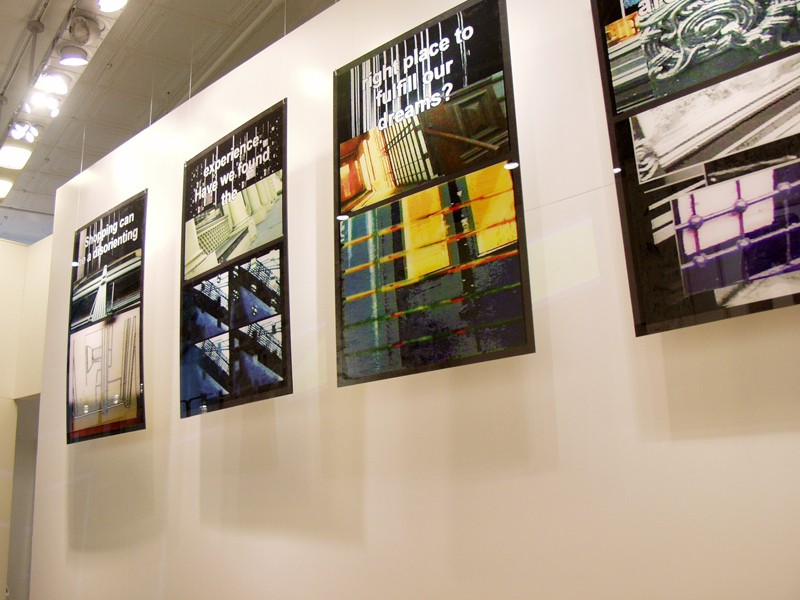
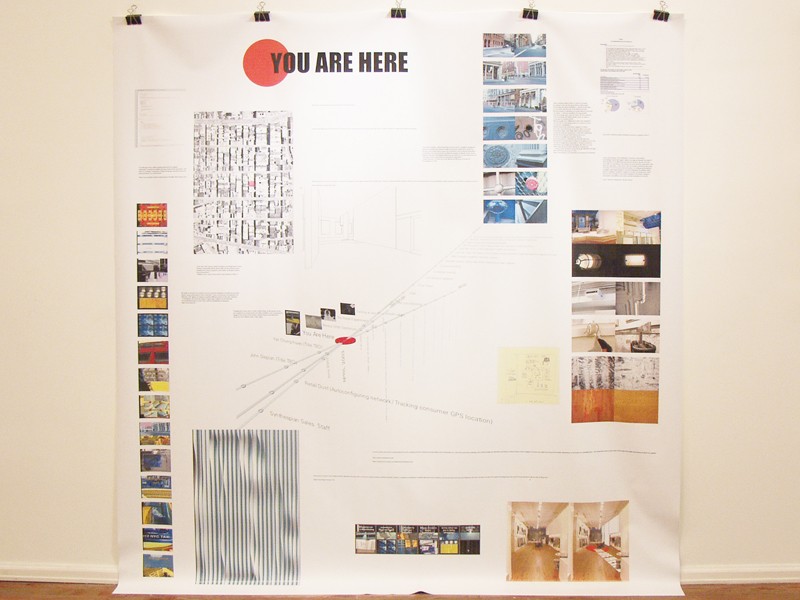
Six hanging C prints on plexiglas 32″x48″ which contain elements of text, and when taken together say the following: “Shopping can be a disorienting experience. Have we found the right place to fulfill our dreams? Where are we in socio-architectural terms when we are in Soho shopping? You are Here.”
4. Clothing rack hanging Plaques:
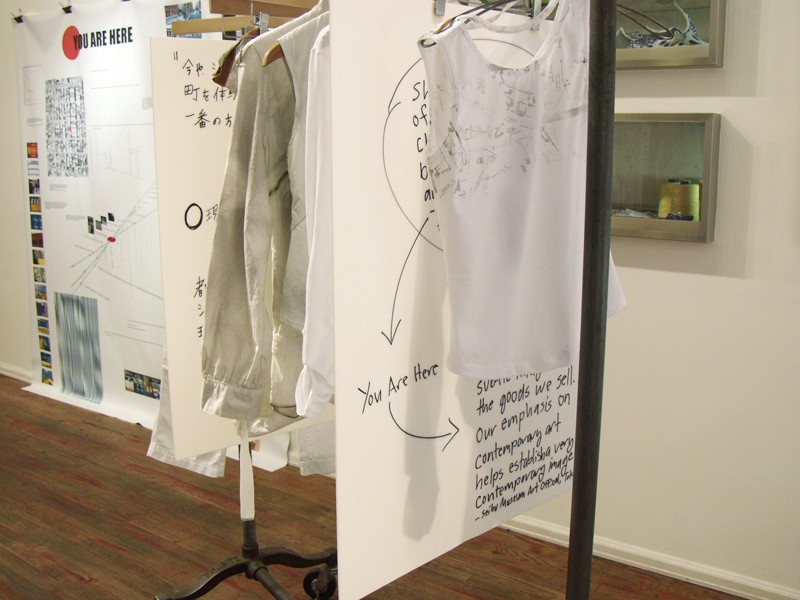
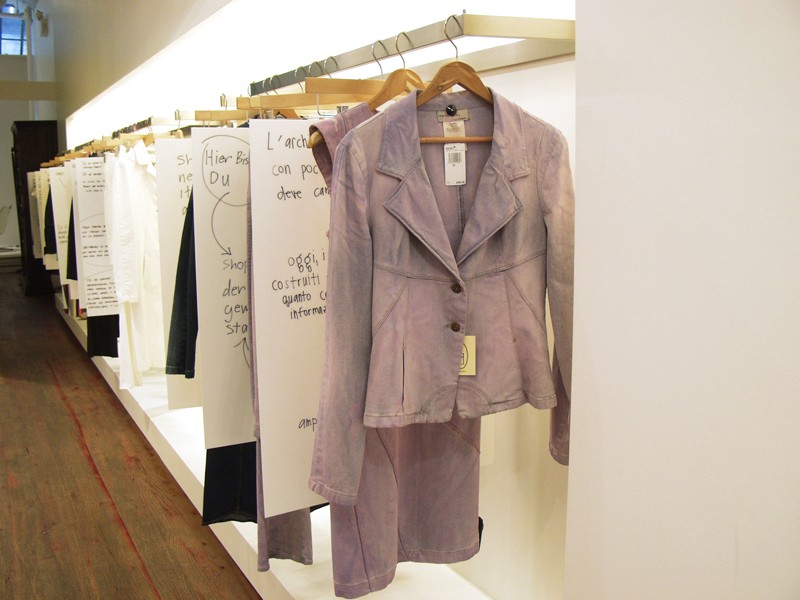
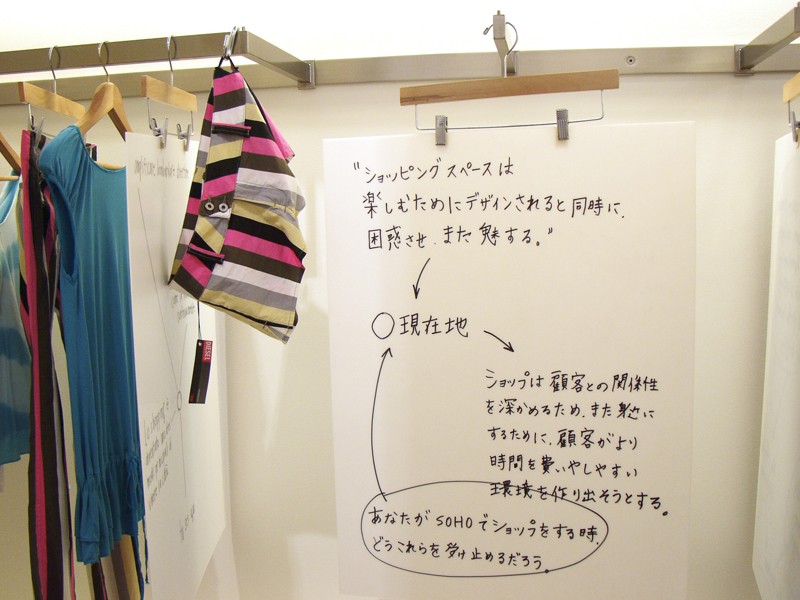
1/8 inch thick, 24 inch by 30 inch mat white plastic plaques, designed to hang among the clothing that was being sold. These are intended to be roughly the same size as the garments themselves and are hung on hangars, just like the clothing. Text written in black marker in Seven different languages: English, Spanish, French, German, Italian, Japanese, and Korean, gives pointed information about the historical development of retail architecture and the effects on shopping. (This turned out to be a particularly effective intervention in that Soho is filled with tourists and with so little support in the US for foreign visitors, they strongly gravitated to, and took interest in, something written in their native language.)
5. Map of retail development and in-store design:
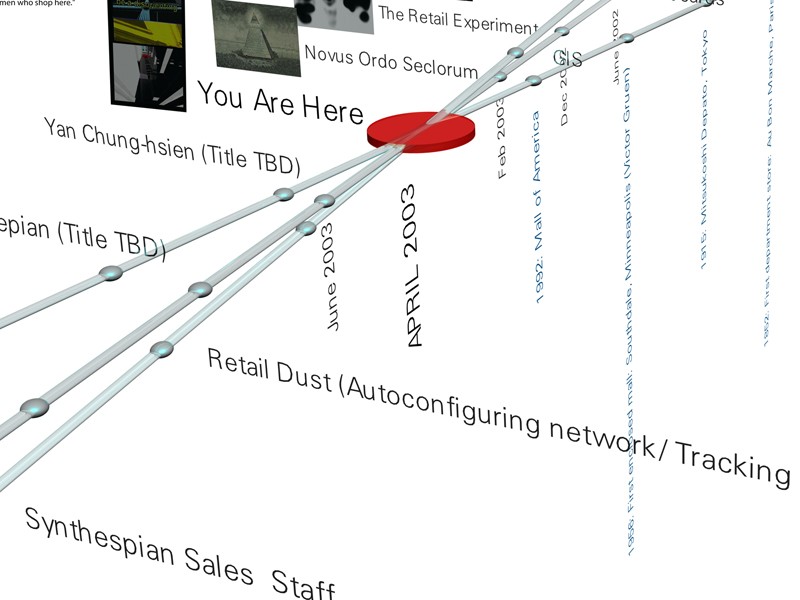
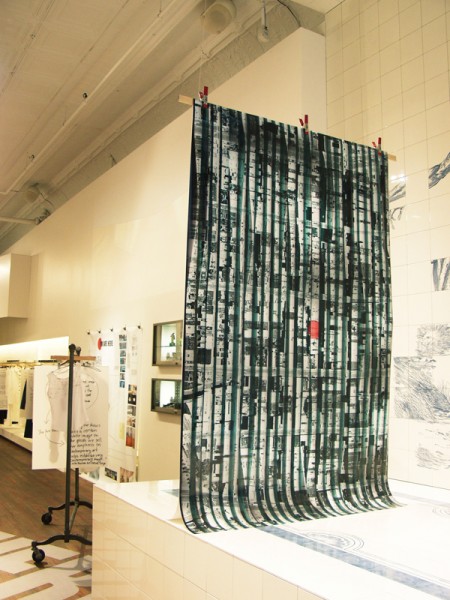
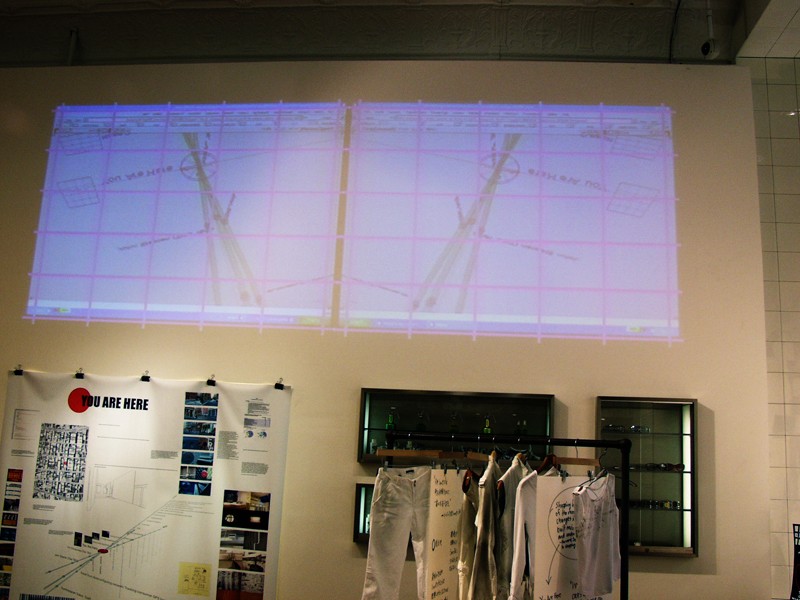
A 73 inch wide by 77 inch high hanging map printed on the vinyl used for architectural “building wraps” (the very large scale billboards on the exterior of buildings) displaying visual details about the interior and exterior of the store, details about the individual interventions in the installation, text info about the neighborhood and the history of shopping, and time lines for the Evolution of Retail Mechanisms, Retail History, and the Diesel Denim Gallery. Important developments such as Joseph Paxton’s Crystal Palace, and the first know use of mannequins are noted. The history is tracked into possible futures including synthespian sales staff.
6. Satellite view of the store with data overlay:
Hanging print of Satellite view of the neighborhood along with data overlay relating to retail space use in the neighborhood of Soho.
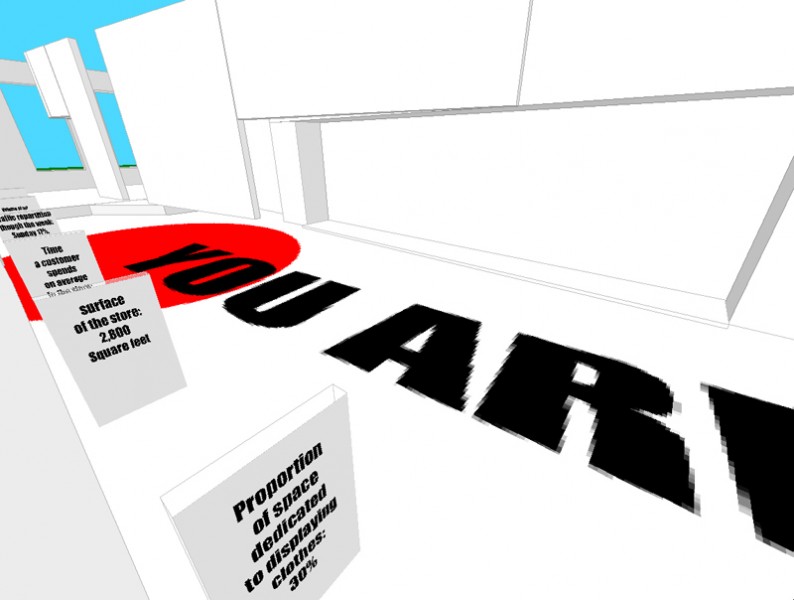
7. Interactive 3D Fly through:
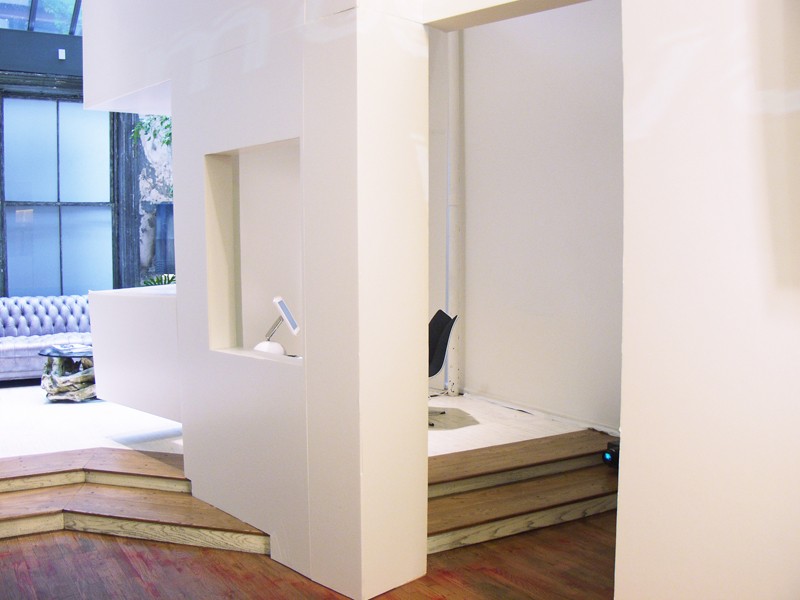
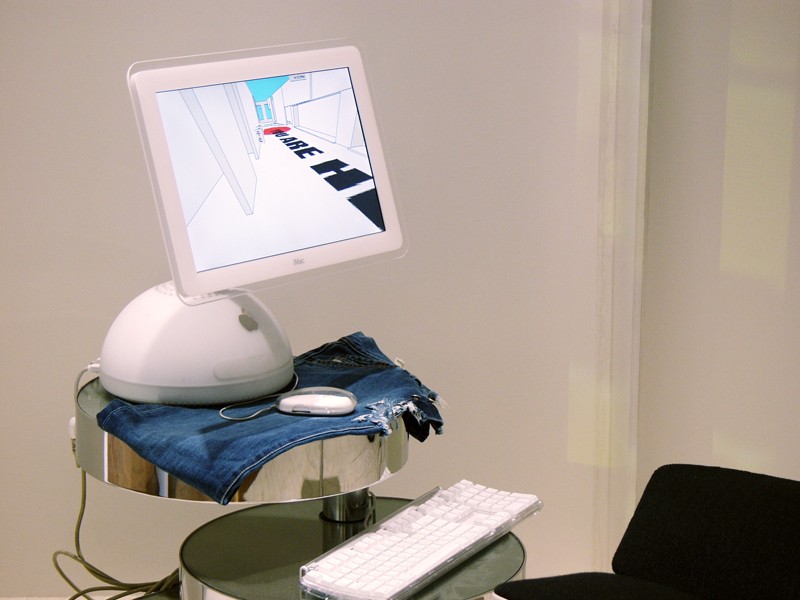
A computer and projections at the back of the store, behind the foam core wall containing an interactive 3D fly through of the store with slabs floating in space giving information on everything from the number of daily visitors to the store, to the amount of air that passes through the air conditioning system each month.
8. Video projection:
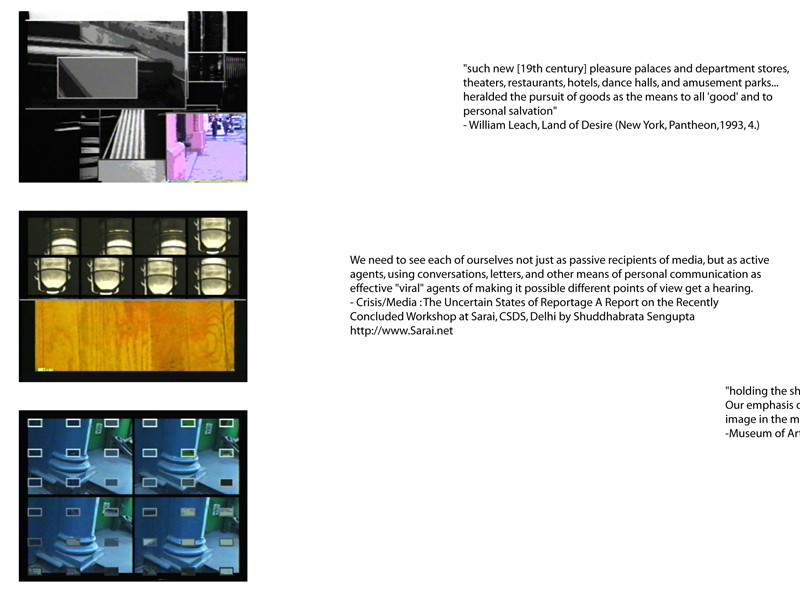
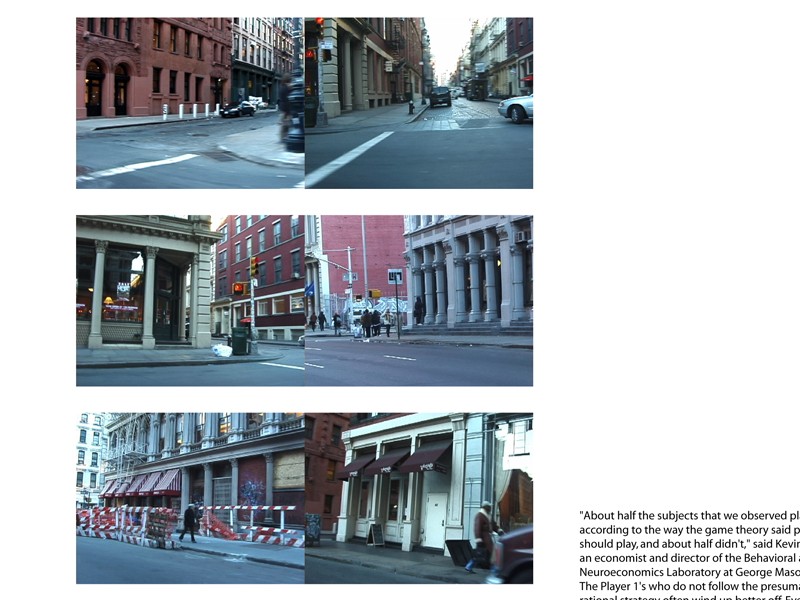
Video projection from three projectors, of the video collage made during the live mix performance, Which included a walk and drive through of SoHo, close ups of design details about the store, text on retail Design, live video of the audience in the space, and 3d fly through of the info time lines.
Â
Project Description:
When I was first approached by curator Sebastien Agneesens about the possibility of creating a work for the Diesel Denim Gallery I thought, what kind of artwork could possibly stand up to the retail environment and not get eaten by it, not turn into advertising for the products around it? I decided the only likely work would take on the structure of retail architecture itself, as a subject, and though it would still be ground up and consumed, it might transmit its meaning virally in the process.
As is pointed out in the brilliant and encyclopedic tome “The Harvard Design School Guide to Shopping”, shopping is everywhere these days. The museum, the airport, the nightclub, the university. Shopping is blending with or replacing, almost every kind of urban activity and has become one of the main ways we experience life in a city.
Though shopping is one of the most temporary and unstable types of urban activity, contemporary cities are attempting to use it as the main building block or foundation for civic life. Shopping is not a viable alternative to fundamental communal activities and services, because it doesn’t necessarily last. Shopping has a vital place in society but should not be made to do the job of institutions.
Shopping architecture is cheaply made because like fashion it must constantly change. Buildings can last for 5000 years, but shopping architecture is currently typically viable for only about 3 years before it must be completely transformed into something new.
The timeline for retail development is so brief that stores go from model to completion to obsolescence in almost no time at all. Retail architecture is ephemeral, lasting a brief moment. Existing as much in the design and model phase as in the actualized phase, the store itself is there for such a brief time in historical terms as to make it like a momentary reflection, like a model, hardly real.
Even when realized, retail architecture is often so cheaply built as to be a facade. Like a Hollywood back lot. Like a movie set.
The store exists as much as data as it does as physical building materials. Realtime information tracking, computer modeling of consumer behavior, constant monitoring of shoppers through multiple forms of surveillance media. The store as a virtual and data construction is much larger and more real in some ways than the puny physical location. Even the idea of “brand” and the projection of brand out into the world as advertising can be considered part of the virtual extension of a store.
But the physical locale has its advantages and has a depth and breadth unknown to the virtual trackers. The window washer who wants to address issues of race with passers-by. The gum on the sidewalk that records a trace of the life of a breathing person at this locale, the stone, the iron, the rain on your face. The beauty of being alive in the present moment.
Shopping spaces are designed to delight, but also to confuse and mesmerize. In retail architecture huge amounts of time, money, and research is devoted to this. Scripted disorientation is used to actively confuse shoppers so that they become more susceptible to making impulse purchases. The Gruen Transfer, (named for the first shopping mall designer,) is a psychological state where movement slows, eyes glaze over, jaws slacken and the mind temporarily ceases to function properly because it is experiencing too much input. The exact distance in feet and the number of seconds it takes to induce this debilitated state is actively measured in contemporary retail design.
In ancient times there was a market outside the borders of the city. People went there to exchange goods. There was no buying and selling organized inside the town. In the current era shopping is one of the major forms of urban activity. Imagine a modern city where there was no shopping. What kinds of activities would you do in a city like that? What would be important? What would you care about and devote time to? What might constitute meaningful civic and urban interaction?
Shopping, like advertising can’t simply be discontinued because it is being used in contemporary society to fill deep seated needs, and there are currently few social structures to replace it. If we at least begin to become aware of the lengths to which designers go to alter our consciousness as we go about the process, then we can begin to shape our own outcomes from the experience.
Toward this goal, the project records, through multiple forms of digital media, the local environment in the neighborhood surrounding the gallery. It gathers, in this case, intimate details of life in Soho, New York. In addition it creates an architectural and mediatic intervention into the actual space. Research on the historical development of retail, information flows, the nature of shopping and the meaning of place is presented in dynamic visual, audible, and textual form, heavily layered and worked.
Media forms include a stripped back 3D computer model of the entire store with text replacing products, a 3D data map of retail and shopping, satellite photographs, digital video, still photography, and audio samples. All these mediatic elements are combined in an A/V performance work created live, in the gallery, and then subsequently on display for the duration of the installation.
Shopping can be a disorienting experience when we are offered so many possibilities regarding place, design, and personal style. Have we found the right place to fulfill our dreams? Where are we in local, architectural, geographical, virtual, and cultural terms when we are wandering around in Soho, shopping? The project gathers the mediatic traces, then lays it all out for you. At the Diesel Denim Gallery – YOU ARE HERE
Credits:
Concept and realization: Paul Clay with curator Sebastien Agneesens
Live Video Mix:Â
Video – Paul ClayÂ
Audio – Arrow Chrome
3D Data Mapping: Jose Salinas, Architect, founder of Knobs Design
3D Animation: Paul Clay, Willyum Delirious, Jose Salinas
Publicity for Fictive: Berit Fischer, Naiying Kuo
Installers for Fictive: Julie Allen, Mark Power, Chang-Jin Lee, Yukiko Hayakawa
Translations for Hand Written texts: Jose Salinas, Yukiko Hayakawa, Sebastien Agneesens, Berit Fischer, Julie Allen, Chang-Jin Lee
Curated by: Sebastien Agneessens – Formavision
Special thanks to all the people at Diesel, from those at the top who approved this thing to those who did publicity, install, letting us in after hours, and supporting us as we did the work. You made this event possible. Thank You.
You are Here is a project of Fictive, a loose constellation of multi-disciplinary art creators, and a kind of fictional arts collective founded by Paul Clay and composed of whoever happens to be working on aproject at any given moment.
A one hour long live video mix performance which contemplates the meaning of locality and place in contemporary society, presented first at Magazin 4, Breganz, Austria, and then as part of the 10 year anniversary of the Kunsthalle Wien, Vienna, Austria
Â
Project Description:
Imagery and sonic details of the local space are meticulously recorded. This includes everything from stair rails, handles, and window joinery, to snippets of street conversation. Following this details of the street level built environment in the city and the surrounding vicinity of the place to be contemplated are documented. This imagery is then mixed live in real time on the evening of the performance, along with live cameras, text about place and architecture, and performative elements evoking the nature of recording, inscription, and display.
Despite its use of carefully gathered documentary detail, the live mix and filtering process attempts to devalue contentism or focus on narrative elements. Instead it evaluates the raw visual and aural content, and reconfigures this to tell its own story, more as nonfigurative painting is understood to convey meaning. Multiple simultaneous video projections created by mixing a host of inputs including videotape, infrared cameras, and computers are employed. The work brings the energy and structures of the club and alternative happening scenes into play with a slightly more contemplative and philosophical approach to generating meaning. The work is an attempt to use the current tools available in new media to explore the age old question of what it means to be, to inhabit.
The work also has a strong ludic component. A reshaping of the interaction of the individual with the environment – not following a normal culturally dictated path or set of instructions. Not even directly accomplishing a culturally prescribed or proscribed goal. Discovering. playing. Like a Trickster figure, the artist comes to your “place”, like the very first human being, like the character of Coyote in Native American myth, loving life, sharking around and looking for things, not following the rules or even aware of them, gouche and unschooled, what does he see? What gets recorded? What can be revealed? …and then there it is, its all on display. Displaced and played with. Creating a sacred event or performance, a celebration, where the core qualities of a place may by chance be revealed. Dis-Play.
Â
Â
Some Background Theory about Dis-Play
How natural and man-made places embody meaning – the spirit of place:
“There was a house made of dawn. It was made of pollen and of rain, and the land was very old and everlasting. There were many colors on the hills, and the plain was bright with different-colored clays and sands. Red and blue spotted horses grazed in the plain, and there was a dark wilderness on the mountains beyond. The land was still and strong. It was beautiful all around.” – N. Scott Momaday
Native American plains peoples have a huge respect for land and place, born partly out of harsh environment, but much more from thousands of years of tradition. They understand the value of knowing a place through deep lived experience. We, also, can feel deep meaning in volume and expanse in the natural environment. Everyone who has been to mountains, deserts, forests, and oceans knows this on a visceral level.
In addition there are small localized physical forms in the land which bespeak place on a gut level. In Iceland there is a belief that “Hidden Men” or spirits exist in places that have a special character. Roads get built around significant boulders or depressions in the environment lest the spirit of the place be disturbed and cause bad luck. Why is this the case? Simple-minded folk tradition? Maybe not.
We can feel the specialness of the place around the boulder, and if it is removed the valuable experience is gone. The feeling IS a manifestation and can be understood as the spirit of the place. Removing the boulder disrupts the spirit, with grave consequences for those who will have an emptier life as a result of its loss. The mystical invades directly into our 21st century experience. As film director Hal Hartley put it after shooting there: Try to use the rules of what you believe. In Iceland, they don’t apply. You can attempt to fight the volcanoes, the ice, and the sea – but you will not win. These things have a truth far beyond our meager knowledge.
Aboriginal peoples in South Asia carry a sacred stick with them as the community travels from place to place. They understand the stick they carry as a direct connection between heaven and earth, and that the stick is at the center of the world, or rather, IS the center of the world. The center shifts and travels with them as they go. They are always in the spiritually vital center place.
Similar spatial meanings to those we experience in the natural environment are also conveyed to us, in varying degrees, through architecture – but in the case of architecture we are making the boulders and sticks.
Â
Architecture as natural human excretion:
James Turell once said to me he thought people were much like hermit crabs. Having no shell of their own, but needing one always, they would go from one empty shell to another as they go about their business, home, to car, to building, finding/making new shells and staying protected.
He also said he didn’t believe we had much more control over the urban sprawl of Manhattan, than coral do over the Great Barrier Reef. It is a process we are a direct and active part of, but do-not/can-not control. Architecture is a physical manifestation of our “being” on the earth. The outcome of a system we only think we regulate, an actual material excretion of our collective physical organism, a trace of who we are. What information is contained in that trace? How does how we conceptualize what it constitutes change what it actually is and means for us?
Â
Inhabiting – Home and the center of the universe:
“In every dwelling, even the richest, the first task of the phenomenologist is to find the original shell” – The Poetics of Space, Gaston Bachelard
We can feel the same gut level responses to the volumes of the built environment as those of the natural if we but allow ourselves to be attuned to them. The marking of the passage from the world of the secular to that of the sacred and back again, feeling the little openings onto some other kind of experience, the sense imbued in us by structures and the expression of physical and design forces within them, the reach and extension, the amplitude of a space, the vaulting and volume, the materialization of ideals. Yet, as Bachelard says, conveying the meaning of place is not simply about describing the architecture and built environment of an area, not a kind of travel brochure enumerating the picturesque features. Rather it is about getting down in between the crevices in the cobblestones, the alleys between the sky scrapers, and getting to the liminal core: what does it mean to inhabit, to have a place which is home? What does it mean to be in a place which is yours, or to go to a place that is someone else’s? To navigate memory as well as the physical environment in the street.
Â
Mapping and addressing, limits of the 3D Western perspective:
In the documentation for an artwork Laura Kurgan did at Storefront for Art and Architecture, a GPS manufacturer’s brochure is quoted as saying “GPS receivers are fast becoming small enough and cheap enough to be carried by just about anyone. That means that everyone will have the ability to know exactly where they are, all the time. Finally, one of man’s basic needs will be fulfilled.” Part of the failure of insight on the part of the brochure maker is the belief that dividing everything into a Cartesian grid and plotting points on it constitutes knowledge of place. It is far more than a geographical question. Knowing where you are is not just a matter of orienting one’s self in Western 3D space, but of having a sense of one’s relationship to ones surroundings and the universe. When someone faints and they don’t remember at first where they are, they do not regain an understanding from being told a GPS location, they know as they remember the circumstances of their life up to the present moment.
Â
Screens, Media Networks, virtual architecture, and augmented space:
Answering the question of what place means is further complexified by our current ability to operate telepresently across aural, visual, and textual networks and to be at play in a set of ever shifting data nodes across a variety of fields from geopolitical, to corporate database, to global market.
In order to handle this additional layer of place the developed world is becoming increasingly display-centric. We rely on displays in our phones, PDAs, computers, televisions, cars, digital audio players, and domestic appliances to help envision, direct and control the necessary flows of data. These aspects of place are more and more being integrated into architectural design, so that the design contains both physical and data space. It is currently referred to by a variety of names including Virtual Architecture and Augmented Architecture. It should be noted that this is not a reference to 3D models used as a design guide for building, but rather to screenal and data space directly incorporated into the finished architecture. A new part of the built environment.
As Lev Manovich notes in his The Poetics of Augmented Space: “Going beyond surface as electronic screen paradigm, architects now have the opportunity to think of the material architecture they are normally preoccupied with, and the new immaterial architecture of information flows within the physical structure, as one whole…the design of electronically augmented space can be approached as an architectural problem.” So the question of how data travels and impacts place gets addressed through architecture.
Â
Travel, morals, and cultural flows:
Data isn’t the only thing that travels and effects meaning. The physical movement of people also has a huge impact on place and tradition. There are effects on both those who travel and those who are visited. There is an aspect of societal escape in travel. College kids on spring break in Florida operate on an entirely different set of moral standards than they do at home. There is a traditional Japanese saying which translates something like: “Shameful acts committed away from home may be forgotten.” Travelers, when away from their “place” lose certain cultural restrictions still in force for those who stay at home, because the forces of place no longer hold full sway.
Interestingly, this liminality, disruption, or displacement actually takes place for local residents of a place which is visited. Flows from one way of thinking meet with local internal flows blending or bubbling up in fluid dynamic. The outsiders bring a disruption of world view, a change in the status quo. Local moral and cultural disruptions can occur, a complex combining of things jostled together and not yet sorted out. A sometimes uncomfortable reframing of point of view is forced on all concerned. Many things are kludged on top of each other that exist temporarily or temporally in mixed form – keyed cut and layered on top of each other in crazy, unorganized, not yet properly mediated form – the new world view, not yet sorted, and the liminal areas dangerously exposed. Hidden truths about unquestioned assumptions are brought vividly into focus. Things spiral dangerously out of control only to be brought back into new kinds of patterns. Secret trysts with travelers which go unreported to wives or boyfriends. A longing for the artificially conceived exotic place of the travelers origin, or where they have passed through, and a wish for release from local cultural responsibilities and oppressions. An expansion of who one can be. Real places taking on iconic meanings for visitor and visited.
Â
Tricksters and ludic behavior:
Travelers can take on qualities of the trickster figure from Native American myth. Paradoxically, the trickster helps to define place by failing to follow the normal locally-dictated path or set of instructions. He will not even directly accomplish any culturally prescribed goal. The figure of Coyote is a good example. Typically arriving on the Earth just before the first human beings, he is gross and not yet fully formed. Though utterly uncultured (because he has arrived to invent it) he runs about goofing off and causing problems, a bad boy, but in the process he lays the groundwork for what people will make, and how they will need to behave in order to get along. It is his undirected energy, ludicrous and ludic, which helps define how things should and should not be. A visitor discovering, playing, inadvertently revealing the qualities of culture, and place.
Â
Observation and recording:
For the visitor interested in exploring and capturing these qualities of place, recording poses an interesting dilemma. Recording impacts negatively on ones ability to experience and understand, and yet is vital to help fix the observations one is able to make. Recording, say for example through video or photography, is a very shallow or hollow capturing of the total truth of place. It disrupts the process of actually being there and participating, and in no way comes near to describing the full view of those visited. The camera can’t track back far enough to get the smell and the fact that your daughter skinned her knee here three years ago, or that you secretly dream of owning a house on that hill one day, and in your mind it represents the fulfillment of the life you were meant to have but have not yet achieved. That when you see that tree, or that corner Bodega, you feel a tiny almost buried thrill in your heart because you KNOW you are home. As visitors, we can’t be in the shoes of the people, we can only do “participant observations” from our own perspective.
In attempting to record someone else’s place, one inadvertently gets documentary based on the momentary ephemera of one’s own lived experience. So be it. With luck, one can also capture a bit of the economics and metaphysics of the built environment. What is gum on the sidewalk like? How do traffic systems work. Where should cars stay out of? Where should they stay inside of? What materials are used to build and how do they get joined together? Showing the functioning of contemporary culture on a physical/anthropological level. Again, what are the traces, and how can the more ephemeral meanings which do get recorded in this shallow, pale, or freeze-dried form, be most effectively reactivated and displayed?
Â
Live video mixing, mediatic criteria, and the politics of filters:
Converting media into digital data creates “the unforeseen option of addressing not only images (by frames) but even every single picture element (pixel). Images and sounds thus become calculable and can be subjected to algorithms of pattern recognition – procedures which will “excavate” unexpected optical statements and perspectives out of the audio-visual archive which, for the first time, can organize itself not just according to meta-data but according to its proper criteria – visual memory in its own medium (endogenic).” “not only images become addressable in mathematical operations, but their ordering as well can be literally calculated.” – Wolfgang Ernst, A visual archive of cinematographical topoi: Navigating images on the borderline of digital addressability
Though Ernst is discussing of the philosophy of archives, the algorithms he refers to are exactly what video mixing is based on. Filtration of video signals devalues subject and instead favors formal elements such as volume of luminance, hue and chroma, contrast, and scan line or pixel variation across time. The artificial conceptual structure of line drawing can be applied as filter by selecting edges and augmenting or flattening them. All of the filtering is based on the mathematically analyzed visual properties of the images, on what Ernst calls the genuine “mediatic criteria” of the image.
Visual properties are further complexified by The blending of multiple live video streams so that they mutually infiltrate one another and exhibit permeable boundaries, the primacy of the individual frame broken through keying, cutting patterns, and other algorithmic means of compositing. Paradoxically, this seeming obscuring of the image through manipulation actually opens up a whole range of meaning-generation similar in some way to non-figurative painting. It thus reanimates the ephemeral messages, allowing us to bring them to the fore, and to add depth, to amplify the weak signals, to make these simple things full again, to allow them to be multi-vocal once more. It makes it possible to put back meanings which get lost in the shallow process that video recording constitutes, to reconstitute, and to add new meaning as well.
Â
The meaning of display:
To display is to expose to view or allow to appear, to reveal. It is the presentation of signals or data in visual form, or the physical object on which the data is manifested. Display is a revelation of things which are already there, but need a mechanism, a guide or some letting-loose in order to be fully seen or understood. Video not as screen but as extension, architectural, intellectual, amplified light, but not only in terms of lumens. Amplified across a whole series of Axes, datacly, mediatically, socially, poetically, to reveal not only mass and structure but a narrative of the soul. The screen as gate of heaven, as entry point, passage, membrane, a plane or liminal transition moment onto the sacred beyond. An opening onto, an event horizon.
Â
The sacred and the everyday:
“People sometimes get good at blotting out the sights and sounds and smells around them…perception, when it resurfaces, can catch them by surprise.” – Tony Hiss, The Experience of Place
The possibility of a special encounter, a moment’s awareness, exists at any given instant and can be triggered by encounters with physical places. It’s where these spirits or potential moments of contemplation and awareness reside. In spaces. In localities, in a particular place. A billion little gates to heaven, waiting to be discovered. The values of the sacred reside deep in the heart of the everyday, in the cracks in between categories, in the things we make. the spiritual is directly embodied in physical form in the built environment. It contains our “hidden people”. the extruded aluminum of the prefab window sills in Tokyo or the molded plastic fender of a bus in New York City contain, in physical form, the triggers of familiarity, the qualities of volume and form, the manifestation of the spiritual value of home and place, of our deepest unvoiced feelings. Talismans of the built environment. The hidden can come out and speak to us.
Â
Dis-Play:
“People tend to suppress that which they cannot express. If an experience resists ready communication, a common response…is to deem it private…and hence unimportant…relatively few works attempt to understand how people feel about space and place, to take into account the different modes of experience (sensorimotor, tactile, visual, conceptual) and to interpret space and place as images of complex-often ambivalent-feelings.” – Yi-Fu Tuan, Space and Place: The Perspective of Experience
With Dis-Play we celebrate the mundane and often overlooked qualities and meanings in the built environment, the things you can’t quite put a finger on. We honor the importance of locality and site, bringing everyday experience to the plane of the sacred and contemplative. Looking at a hand, a brick, a street, a piece of chewing gum, we see the world we have created.
“That’s why we seize the moment try to freeze it and own it, squeeze it and hold it, cuz we consider these moments golden” – Eminem
It is an attempt to get a grasp on, or gain insight into – who we are, to get in touch with ourselves through the portal of architecture and the street level lived experience. Architectural details, interior and exterior elements merge and mutually infiltrate one another, the screen becoming a mediation plane between the secular and the sacred, a permeable membrane our souls can pass through to see beyond the detail – to the whole of the picture of who we are, at this moment, on the planet. What is it that we are? And where are we, not just in the universe, but directly, right now, locally? To define where we are in a way that you can know it, not just conceptually, but on a gut level, in your heart. Like a taste on your tongue. Like a scent memory that takes you right back to the moment. Like a place you know. Like home.
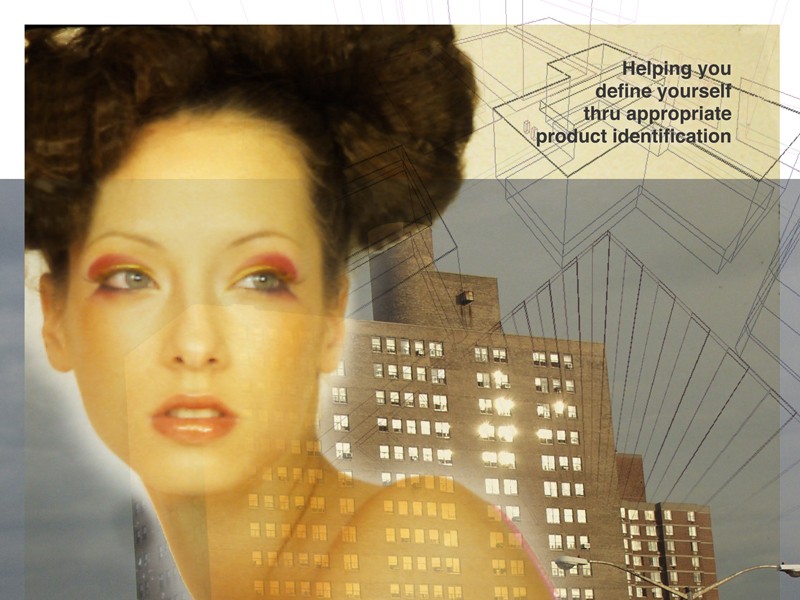
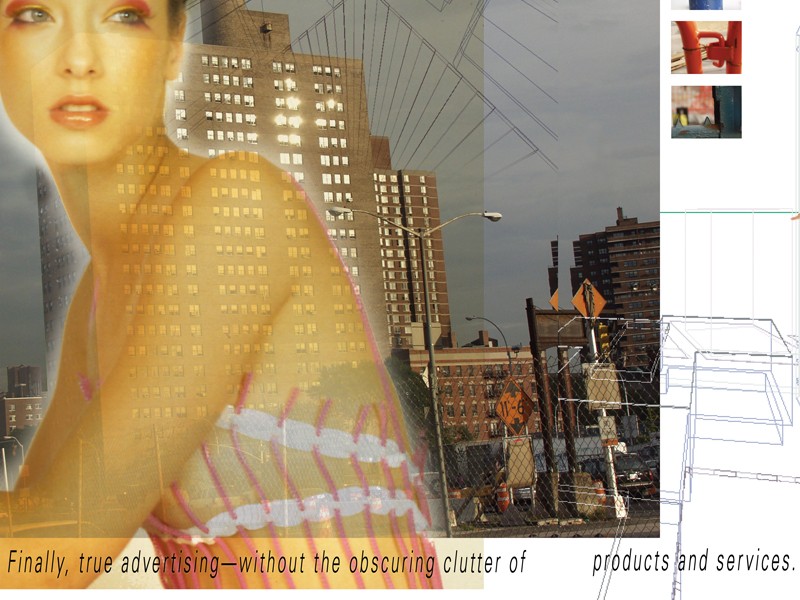
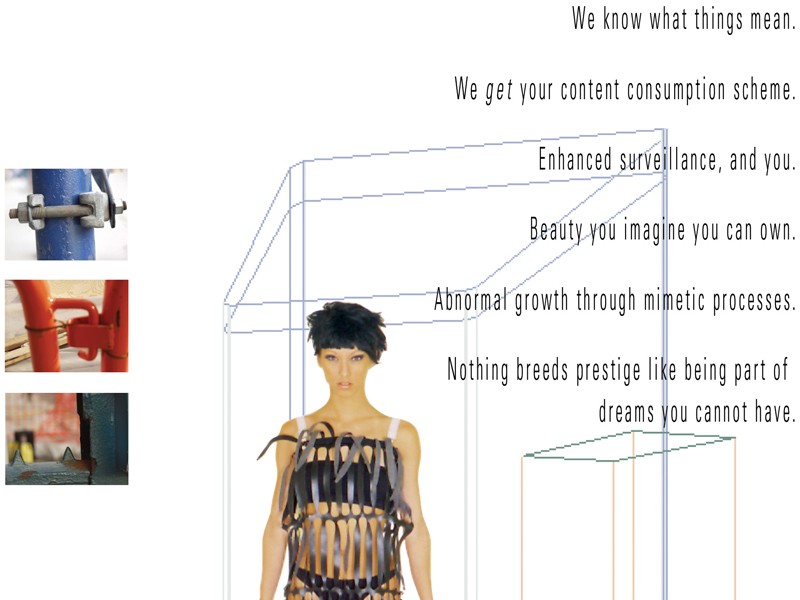
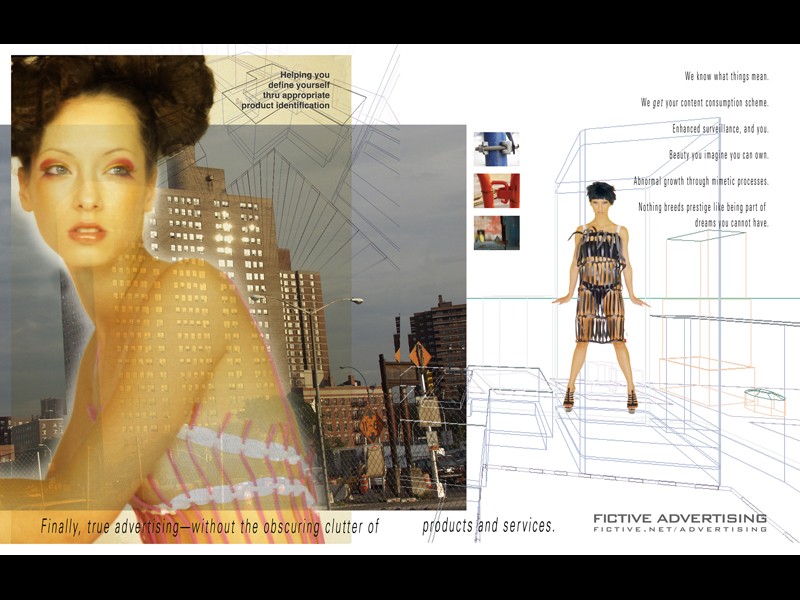
Fictive Advertising – Conversion of periodical literature to product message delivery systems.
Â
A two page magazine spread, presented in NY Arts magazine, created as an artwork intended to critique magazine advertising.
Image Samples:
Download Medium Resolution PDF File:
Fictive_Advertising PDF
Â
Project Description:
Business/Economics, Symbol Systems/Myths and Dreams.
“The major media are large corporations, owned by and inter linked with even larger conglomerates. Like other corporations, they sell a product to a market. The market is advertisers – that is, other businesses. The product is audiences for the elite media, relatively privileged audiences. So we have major corporations selling wealthy and privileged audiences to other businesses. Not surprisingly the picture of the world presented reflects the narrow and biased interests of the sellers, the buyers, and the product.” – Noam Chomsky.
Culture jammers have been making fake ads for a while now. They usually involve hacking of a specific ad or campaign. “Subvertising.” Part of the hack is usually to attack a particular brand. With fashion “subvertisements” the most common ones are Calvin Klein and Tommy Hilfiger. Though this is powerful and effective, in some sense it’s like what Naomi Klein, author of “No Logo,” says about attacking corporations. A specific Multinational works as a handle to grab on to or rally against in order to get a point across, but the real problem which needs addressing is the hugely complex structure of global capital and trade agreement formation.
The problem is twofold. Part of the issue is the economics, and part of the issue is the meaning or symbol system. John de Graaf, Thomas Naylor, David Wann in their book “Affluenza: The All-Consuming Epidemic” describe consumerism as “a painful, contagious, socially-transmitted condition of overload, debt, anxiety and waste resulting from the dogged pursuit of more.” Yet people aren’t stupid, so what is going on?
Advertising is an important part of the structure. Its relation to the larger issue of global economic exploitation needs to be understood. In one way it can simply be read as giant corporations trying to poison our thoughts so that we consume endlessly more product. Yet a solely economic analysis of advertising does not get at the whole of the problem. Equally important is its fundamental relation to meaning in our culture. Advertising is amazing. Advertising is beautiful. Advertising uses what we care about, the deep seated and fundamental beliefs and longings in our culture. We have to see that advertising, for better or worse, is carrying a huge part of our cultural canon right now.
In the 1980’s people finally admitted to themselves that the point of businesses is not to provide products or services. The point is to make money. Because money, not service, is the ultimate goal, a bad product or service is just as effective as a good one, or none at all, if it makes money for the corporation. Provision of product or service is tangential to business. The two may happen to be in confluence at times but there is no guarantee or even need for them to be. It’s quite possible that the less of a product you have and the less you pay workers to produce it the more profit you garner.Â
Similarly, advertising is not about a product or service, but rather about getting as many people as possible to consume. It is not the product which is sold but the sense of a lack in the potential consumer. A combination of a dream and a sense that it is as yet unfulfilled – and that consuming will consummate the new hope or dream. People focus on this rather than other types of activity which might be helpful for them, but which might disrupt the status quo. This is the heart of the second part of the problem, the symbol system.
As Andrew Boyd of the culture-jammer mime campaign “Billionaires for Bush (or Gore)” notes “advertising imagery is the ultimate stealth virus. It has long been post or pre rational, operating by subconscious association, by veiled promise and threat, by mobilizing our longings and our dream world. Rational critique can’t find a handle by which to challenge such a worldview.”
Though advertising can seem trivial, it is actually carrying inside it our most prized beliefs. Further, it is one of the main avenues of dissemination for these important cultural concepts. Some of the finest artists in the world work in it, and they receive a great deal of prestige and recognition for doing so. It is in some way similar to shamanistic practice in folk societies. Not that it is arcane or inscrutable but rather that it involves practitioners or technicians who must get at the heart of the collective dreams within a culture and then harness these. The sacred practitioners do it partly for their own ends, but also to move the culture forward in some ideal path they perceive as right, based on their reading of the dreams and traditions.
Fashion, too, can seem frivolous and inconsequential, yet when anthropologists study a culture, the clothes they wear, and the daily things they surround themselves with, tell a tremendous amount about who they are, how they live, what they care about, and how they see their place in the cosmos.
A lot of how we understand the world still comes from myths buried deep in our general culture’s understanding. Advertising works on these myths, within the subconscious symbol system. Brands are little different from Totems. Providing strength, coherence, a path or organizing principle – a community of the like minded. A special society or group, separate from the others, a definition of self.
I don’t think there can be an easy dismissal of advertising, despite its huge negative impact on creating a sustainable future, because its function is so central to our social structure and because it is working directly with our core cultural beliefs. The key is to acknowledge the beauty and at the same time critique the structure.
Rather than spoof a particular brand, “Fictive Advertising” is an attempt to make reference to a host of styles, reflecting the entire genre of advertising. The use of the sexy dresses is an allusion to couture and high end ready to wear. The architecture refers to the anomic landscapes and empty urban environments used to promote hip hop sportswear. The little boxes and multi-section layout come from interior design ad aesthetic, and the wire frame or spot illustration comes out of youth culture alt/skate punk lifestyle looks.
Economic exploitation around the globe causes hate at being oppressed. We are belatedly waking up to this obvious fact. Terror is not justifiable. Ever. Period. We as a culture are not to blame for terror. It is also a poor tactic in that it leads to more oppression. Yet the problem is that human suffering and human rights violations are coming back to haunt us, as normal people in exploited nations choose to support fanatics as the only way they see out of their own oppression. If they were actual participants in the largess of the global economic structure they wouldn’t want to destroy it, as they would be hurting themselves. Instead, we get the hard earned value of their labor, and they are left hopeless and desperate. Meanwhile, we are constantly encouraged to want to get more. All of this economic truth is also hiding behind ads.
Despite the concerted efforts of the World Bank and the WTO, I do not believe there is a Global Conspiracy of Western Corporate Industrialism to destroy the World nor of Advertisers to steal our minds. Rather there is an organic cultural process which we can ignore and allow to occur or which we can recognize, and attempt to alter. The first step in changing anything is to understand it. Like the Wizard of Oz, it may look big and shiny, all-powerful and inscrutable, but it is actually operating with basic processes, with gears and levers that we can grasp.
Kalle Lasn of the venerable ADBUSTERS notes “right now, corporations have the power. They beam their memes into our brains at the rate of a few thousand ads, brand logos and marketing thrusts per day.” and further “Every outburst of cognitive dissonance is useful, but to mount a serious challenge against corporate rule, we jammers must build our own meme factory. Because we have severely limited budgets, our strategies must be perfectly crafted to tear gaps in the glitter of the consumer spectacle.”
Jump in and work the stuff over. Squeeze it a little and see what pops out. Get out the scissors and start shaping. Fictive advertising: Doing our part to tear a few gaps in the glitter. Making some new glitter. Paying a little attention to the man behind the curtain…
Credits:
Conceived and Created by Paul ClayÂ
Layout and design by Paul Clay and Jamie LeoÂ
Fashions: Paul ClayÂ
Styling: Star Studio ProductionsÂ
Photo: Jo Lance www.jolancephoto.comÂ
Make-up: Yukiko Takagi and CadilacÂ
Model: Annalyce
Special thanks:
Abraham Lubelski, Kazue Soma, and everyone at NY Arts Magazine.